Showing posts with label Gaza. Show all posts

June 8, 2009

West Bank Settlements and the Future of U.S.-Israeli Relations

By Honorary Political Season Contributor - George Friedman of Stratfor

Amid the rhetoric of U.S. President Barack Obama’s speech June 4 in Cairo, there was one substantial indication of change, not in the U.S. relationship to the Islamic world but in the U.S. relationship to Israel. This shift actually emerged prior to the speech, and the speech merely touched on it. But it is not a minor change and it must not be underestimated. It has every opportunity of growing into a major breach between Israel and the United States.

The immediate issue concerns Israeli settlements on the West Bank. The United States has long expressed opposition to increasing settlements but has not moved much beyond rhetoric. Certainly the continued expansion and development of new settlements on the West Bank did not cause prior administrations to shift their policies toward Israel. And while the Israelis have occasionally modified their policies, they have continued to build settlements. The basic understanding between the two sides has been that the United States would oppose settlements formally but that this would not evolve into a fundamental disagreement.

The United States has clearly decided to change the game. Obama has said that, “The United States does not accept the legitimacy of continued Israeli settlements. This construction violates previous agreements and undermines efforts to achieve peace. It is time for these settlements to stop.” Israeli Prime Minister Benjamin Netanyahu has agreed to stop building new settlements, but not to halt what he called the “natural growth” of existing settlements.

Obama has positioned the settlement issue in such a way that it would be difficult for him to back down. He has repeated it several times, including in his speech to the Islamic world. It is an issue on which he is simply following the formal positions of prior administrations. It is an issue on which prior Israeli governments made commitments. What Obama has done is restated formal U.S. policy, on which there are prior Israeli agreements, and demanded Israeli compliance. Given his initiative in the Islamic world, Obama, having elevated the issue to this level, is going to have problems backing off.

Obama is also aware that Netanyahu is not in a political position to comply with the demand, even if he were inclined to. Netanyahu is leading a patchwork coalition in which support from the right is critical. For the Israeli right, settling in what it calls Samaria and Judea is a fundamental principle on which it cannot bend. Unlike Ariel Sharon, a man of the right who was politically powerful, Netanyahu is a man of the right who is politically weak. Netanyahu gave all he could give on this issue when he said there would be no new settlements created. Netanyahu doesn’t have the political ability to give Obama what he is demanding. Netanyahu is locked into place, unless he wants to try to restructure his Cabinet or persuade people like Avigdor Lieberman, his right-wing foreign minister, to change their fundamental view of the world.

Therefore, Obama has decided to create a crisis with Israel. He has chosen a subject on which Republican and Democratic administrations have had the same formal position. He has also picked a subject that does not affect Israeli national security in any immediate sense (he has not made demands for changes of policy toward Gaza, for example). Obama struck at an issue where he had precedent on his side, and where Israel’s immediate safety is not at stake. He also picked an issue on which he would have substantial support in the United States, and he has done this to have a symbolic showdown with Israel. The more Netanyahu resists, the more Obama gets what he wants.

Obama’s read of the Arab-Israeli situation is that it is not insoluble. He believes in the two-state solution, for better or worse. In order to institute the two-state solution, Obama must establish the principle that the West Bank is Palestinian territory by right and not Israeli territory on which the Israelis might make concessions. The settlements issue is fundamental to establishing this principle. Israel has previously agreed both to the two-state solution and to not expanding settlements. If Obama can force Netanyahu to concede on the settlements issue, then he will break the back of the Israeli right and open the door to a rightist-negotiated settlement of the two-state solution.

In the course of all of this, Obama is opening doors in the Islamic world a little wider by demonstrating that the United States is prepared to force Israel to make concessions. By subtext, he wants to drive home the idea that Israel does not control U.S. policy but that, in fact, Israel and the United States are two separate countries with different and sometimes conflicting views. Obama wouldn’t mind an open battle on the settlements one bit.

For Netanyahu, this is the worst terrain on which to fight. If he could have gotten Obama to attack by demanding that Israel not respond to missiles launched from Gaza or Lebanon, Netanyahu would have had the upper hand in the United States. Israel has support in the United States and in Congress, and any action that would appear to leave Israel’s security at risk would trigger an instant strengthening of that support.

But there is not much support in the United States for settlements on the West Bank. This is not a subject around which Israel’s supporters are going to rally very intensely, in large part because there is substantial support for a two-state solution and very little understanding or sympathy for the historic claim of Jews to Judea and Samaria. Obama has picked a topic on which he has political room for maneuver and on which Netanyahu is politically locked in.

Given that, the question is where Obama is going with this. From Obama’s point of view, he wins no matter what Netanyahu decides to do. If Netanyahu gives in, then he has established the principle that the United States can demand concessions from a Likud-controlled government in Israel and get them. There will be more demands. If Netanyahu doesn’t give in, Obama can create a split with Israel over the one issue he can get public support for in the United States (a halt to settlement expansion in the West Bank), and use that split as a lever with Islamic states.

Thus, the question is what Netanyahu is going to do. His best move is to say that this is just a disagreement between friends and assume that the rest of the U.S.-Israeli relationship is intact, from aid to technology transfer to intelligence sharing. That’s where Obama is going to have to make his decision. He has elevated the issue to the forefront of U.S.-Israeli relations. The Israelis have refused to comply. If Obama proceeds with the relationship as if nothing has happened, then he is back where he began.

Obama did not start this confrontation to wind up there. He calculated carefully when he raised this issue and knew perfectly well that Netanyahu couldn’t make concessions on it, so he had to have known that he was going to come to this point. Obviously, he could have made this confrontation as a part of his initiative to the Islamic world. But it is unlikely that he saw that initiative as ending with the speech, and he understands that, for the Islamic world, his relation to Israel is important. Even Islamic countries not warmly inclined toward Palestinians, like Jordan or Egypt, don’t want the United States to back off on this issue.

Netanyahu has argued in the past that Israel’s relationship to the United States was not as important to Israel as it once was. U.S. aid as a percentage of Israel’s gross domestic product has plunged. Israel is not facing powerful states, and it is not facing a situation like 1973, when Israeli survival depended on aid being rushed in from the United States. The technology transfer now runs both ways, and the United States relies on Israeli intelligence quite a bit. In other words, over the past generation, Israel has moved from a dependent relationship with the United States to one of mutual dependence.

This is very much Netanyahu’s point of view, and from this point of view follows the idea that he might simply say no to the United States on the settlements issue and live easily with the consequences. The weakness in this argument is that, while Israel does not now face strategic issues it can’t handle, it could in the future. Indeed, while Netanyahu is urging action on Iran, he knows that action is impossible without U.S. involvement.

This leads to a political problem. As much as the right would like to blow off the United States, the center and the left would be appalled. For Israel, the United States has been the centerpiece of the national psyche since 1967. A breach with the United States would create a massive crisis on the left and could well bring the government down if Ehud Barak and his Labor Party, for example, bolted from the ruling coalition. Netanyahu’s problem is the problem Israel has continually had. It is a politically fragmented country, and there is never an Israeli government that does not consist of fragments. A government that contains Lieberman and Barak is not one likely to be able to make bold moves.

It is therefore difficult to see how Netanyahu can both deal with Obama and hold his government together. It is even harder to see how Obama can reduce the pressure. Indeed, we would expect to see him increase the pressure by suspending minor exchanges and programs. Obama is playing to the Israeli center and left, who would oppose any breach with the United States.

Obama has the strong hand and the options. Netanyahu has the weak hand and fewer options. It is hard to see how he will solve the problem. And that’s what Obama wants. He wants Netanyahu struggling with the problem. In the end, he wants Netanyahu to fold on the settlements issue and keep on folding until he presides over a political settlement with the Palestinians. Obama wants Netanyahu and the right to be responsible for the agreement, as Menachem Begin was responsible for the treaty with Egypt and withdrawal from the Sinai.

We find it difficult to imagine how a two-state solution would work, but that concept is at the heart of U.S. policy and Obama wants the victory. He has put into motion processes to create that solution, first of all, by backing Netanyahu into a corner. Left out of Obama’s equation is the Palestinian interest, willingness and ability to reach a treaty with Israel, but from Obama’s point of view, if the Palestinians reject or undermine an agreement, he will still have leverage in the Islamic world. Right now, given Iraq and Afghanistan, that is where he wants leverage, and backing Netanyahu into a corner is more important than where it all leads in the end.

A Political Season Response: Friedman's analysis suggests to me that Obama is quite focused on getting the US extricated from its entanglements in Iraq and Afghanishtan and he's thinking broadly about how he needs to do it. His calculus and objective appears to be to create the maximum amount of leverage and room to maneuver in the middle east for the United States as possible. His calculated push on settlements, in particular if sustained despite expected Israeli intransigence, suggests that while he will maintain the US strategic relationship with Israel, he is entirely willing to subsume that relationship to US national security interests in managing the Iraq and Afghanistan conflicts.

January 8, 2009

Hamas and the Arab States

via Stratfor.com

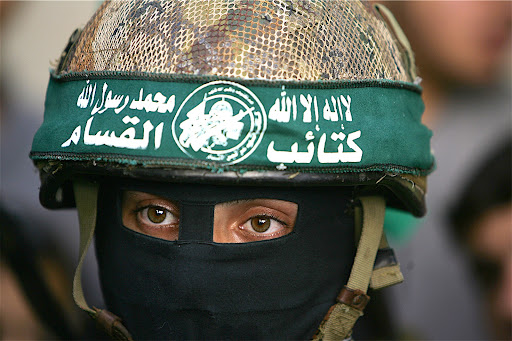
Israel is now in the 12th day of carrying out Operation Cast Lead against the Palestinian Islamist movement Hamas in the Gaza Strip, where Hamas has been the de facto ruler ever since it seized control of the territory in a June 2007 coup. The Israeli campaign, whose primary military aim is to neutralize Hamas’ ability to carry out rocket attacks against Israel, has led to the reported deaths of more than 560 Palestinians; the number of wounded is approaching the 3,000 mark.

The reaction from the Arab world has been mixed. On the one hand, a look at the so-called Arab street will reveal an angry scene of chanting protesters, burning flags and embassy attacks in protest of Israel’s actions. The principal Arab regimes, however, have either kept quiet or publicly condemned Hamas for the crisis — while privately often expressing their support for Israel’s bid to weaken the radical Palestinian group.

Despite the much-hyped Arab nationalist solidarity often cited in the name of Palestine, most Arab regimes actually have little love for the Palestinians. While these countries like keeping the Palestinian issue alive for domestic consumption and as a tool to pressure Israel and the West when the need arises, in actuality, they tend to view Palestinian refugees — and more Palestinian radical groups like Hamas — as a threat to the stability of their regimes.

One such Arab country is Saudi Arabia. Given its financial power and its shared religious underpinnings with Hamas, Riyadh traditionally has backed the radical Palestinian group. The kingdom backed a variety of Islamist political forces during the 1960s and 1970s in a bid to undercut secular Nasserite Arab nationalist forces, which threatened Saudi Arabia’s regional status. But 9/11, which stemmed in part from Saudi support for the Taliban and al Qaeda in Afghanistan, opened Riyadh’s eyes to the danger of supporting militant Islamism.

Thus, while Saudi Arabia continued to support many of the same Palestinian groups, it also started whistling a more moderate tune in its domestic and foreign policies. As part of this moderate drive, in 2002 King Abdullah offered Israel a comprehensive peace treaty whereby Arab states would normalize ties with the Jewish state in exchange for an Israeli withdrawal to its 1967 borders. Though Israel rejected the offer, the proposal itself clearly conflicted with Hamas’ manifesto, which calls for Israel’s destruction. The post-9/11 world also created new problems for one of Hamas’ sources of regular funding — wealthy Gulf Arabs — who grew increasingly wary of turning up on the radars of Western security and intelligence agencies as fund transfers from the Gulf came under closer scrutiny.

Meanwhile, Egypt, which regularly mediates Hamas-Israel and Hamas-Fatah matters, thus far has been the most vocal in its opposition to Hamas during the latest Israeli military offensive. Cairo has even gone as far as blaming Hamas for provoking the conflict. Though Egypt’s stance has earned it a number of attacks on its embassies in the Arab world and condemnations in major Arab editorial pages, Cairo has a core strategic interest in ensuring that Hamas remains boxed in. The secular government of Egyptian President Hosni Mubarak is already preparing for a shaky leadership transition, which is bound to be exploited by the country’s largest opposition movement, the Muslim Brotherhood (MB).

The MB, from which Hamas emerged, maintains links with the Hamas leadership. Egypt’s powerful security apparatus has kept the MB in check, but the Egyptian group has steadily built up support among Egypt’s lower and middle classes, which have grown disillusioned with the soaring rate of unemployment and lack of economic prospects in Egypt. The sight of Muslim Brotherhood activists leading protests in Egypt in the name of Hamas is thus quite disconcerting for the Mubarak regime. The Egyptians also are fearful that Gaza could become a haven for Salafist jihadist groups that could collaborate with Egypt’s own jihadist node the longer Gaza remains in disarray under Hamas rule.

Of the Arab states, Jordan has the most to lose from a group like Hamas. More than three-fourths of the Hashemite monarchy’s people claim Palestinian origins. The kingdom itself is a weak, poor state that historically has relied on the United Kingdom, Israel and the United States for its survival. Among all Arab governments, Amman has had the longest and closest relationship with Israel — even before it concluded a formal peace treaty with Israel in 1994. In 1970, Jordan waged war against Fatah when the group posed a threat to the kingdom’s security; it also threw out Hamas in 1999 after fears that the group posed a similar threat to the stability of the kingdom. Like Egypt, Jordan also has a vibrant MB, which has closer ties to Hamas than its Egyptian counterpart. As far as Amman is concerned, therefore, the harder Israel hits Hamas, the better.

Finally, Syria is in a more complex position than these other four Arab states. The Alawite-Baathist regime in Syria has long been a pariah in the Arab world because of its support for Shiite Iran and for their mutual militant proxy in Lebanon, Hezbollah. But ever since the 2006 war between Israel and Hezbollah, the Syrians have been charting a different course, looking for ways to break free from diplomatic isolation and to reach some sort of understanding with the Israelis.

For the Syrians, support for Hamas, Palestinian Islamic Jihad and several other radical Palestinian outfits provides tools of leverage to use in negotiating a settlement with Israel. Any deal between the Syrians and the Israelis would thus involve Damascus sacrificing militant proxies such as Hezbollah and Hamas in return for key concessions in Lebanon — where Syria’s core geopolitical interests lie — and in the disputed Golan Heights. While the Israeli-Syrian peace talks remain in flux, Syria’s lukewarm reaction to the Israeli offensive and restraint (thus far) from criticizing the more moderate Arab regimes’ lack of response suggests Damascus may be looking to exploit the Gaza offensive to improve its relations in the Arab world and reinvigorate its talks with Israel. And the more da mage Israel does to Hamas now, the easier it will be for Damascus to crack down on Hamas should the need arise.

With Saudi Arabia, Egypt, Jordan and Syria taking into account their own interests when dealing with the Palestinians, ironically, the most reliable patron Sunni Hamas has had in recent years is Iran, the Sunni Arab world’s principal Shiite rival. Several key developments have made Hamas’ gradual shift toward Iran possible:

  1. Saudi Arabia’s post-9/11 move into the moderate camp — previously dominated by Egypt and Jordan, two states that have diplomatic relations with Israel.
  2. The collapse of Baathist Iraq and the resulting rise of Shiite power in the region.
  3. The 2004 Iranian parliamentary elections that put Iran’s ultraconservatives in power and the 2005 election of President Mahmoud Ahmadinejad, whose public anti-Israeli views resonated with Hamas at a time when other Arab states had grown more moderate.
  4. The 2006 Palestinian elections, in which Hamas defeated its secular rival, Fatah, by a landslide. When endowed with the responsibility of running an unrecognized government, Hamas floundered between its goals of dominating the Palestinian political landscape and continuing to call for the destruction of Israel and the creation of an Islamist state. The Arab states, particularly Saudi Arabia and Egypt, had hoped that the electoral victory would lead Hamas to moderate its stance, but Iran encouraged Hamas to adhere to its radical agenda. As the West increasingly isolated the Hamas-led government, the group shifted more toward the Iranian position, which more closely meshed with its original mandate.
  5. The 2006 summer military confrontation between Hezbollah and Israel, in which Iranian-backed Hezbollah symbolically defeated the Jewish state. Hezbollah’s ability to withstand the Israeli military onslaught gave confidence to Hamas that it could emulate the Lebanese Shiite movement — which, like Hamas, was both a political party and an armed paramilitary organization. Similar to their reaction to the current Gaza offensive, the principal Arab states condemned Hezbollah for provoking Israel and grew terrified at the outpouring of support for the Shiite militant group from their own populations. Hezbollah-Hamas collaboration in training, arms-procurement and funding intensified, and almost certainly has played a decisive role in equipping Hamas with 122mm BM-21 Grad artillery rockets and larger Iranian-made 240mm Fajr-3 rockets — and potentially even a modest anti-armor capability.
  6. The June 2007 Hamas coup against Fatah in the Gaza Strip, which caused a serious strain in relations between Egypt and Hamas. The resulting blockade on Gaza put Egypt in an extremely uncomfortable position, in which it had to crack down on the Gaza border, thus giving the MB an excuse to rally opposition against Cairo. Egypt was already uncomfortable with Hamas’ electoral victory, but it could not tolerate the group’s emergence as the unchallenged power in Gaza.
  7. Syria’s decision to go public with peace talks with Israel. As soon as it became clear that Syria was getting serious about such negotiations, alarm bells went off within groups like Hamas and Hezbollah, which now had to deal with the fear that Damascus could sell them out at any time as part of a deal with the Israelis.

Hamas’ relations with the Arab states already were souring; its warming relationship with Iran has proved the coup de grace. Mubarak said it best when he recently remarked that the situation in the Gaza Strip “has led to Egypt, in practice, having a border with Iran.” In other words, Hamas has allowed Iranian influence to come far too close for the Arab states’ comfort.

In many ways, the falling-out between Hamas and the Arab regimes is not surprising. The decline of Nasserism in the late 1960s essentially meant the death of Arab nationalism. Even before then, the Arab states put their respective national interests ahead of any devotion to pan-Arab nationalism that would have translated into support for the Palestinian cause. As Islamism gradually came to replace Arab nationalism as a political force throughout the region, the Arab regimes became even more concerned about stability at home, given the very real threat of a religious challenge to their rule. While these states worked to suppress radical Islamist elements that had taken root in their countries, the Arab governments caught wind of Tehran’s attempts to adopt the region’s radical Islamist trend to create a geopolitical space for Iran in the Arab Middle East. As a result, the Arab-Persian struggle became one of the key drivers that has turned the Arab states against Hamas.

For each of these Arab states, Hamas represents a force that could stir the social pot at home — either by creating a backlash against the regimes for their ties to Israel and their perceived failure to aid the Palestinians, or by emboldening democratic Islamist movements in the region that could threaten the stability of both republican regimes and monarchies. With somewhat limited options to contain Iranian expansion in the region, the Arab states ironically are looking to Israel to ensure that Hamas remains boxed in. So, while on the surface it may seem that the entire Arab world is convulsing with anger at Israel’s offensive against Hamas, a closer look reveals that the view from the Arab palace is quite different from the view on the Arab street.