The blog Naked Capitalism takes note that on Christmas Eve, the Treasury Department announced it had... considerably increased its Freddie and Fannie safety net, by removing all limits on the amounts on offer (an increase from a ceiling of $400 billion) and simultaneously allowing the two GSEs to increase their balance sheets near term. Previously, they had been required to shrink their portfolios by 10% per annum; now it is their ceiling which will be lowered by 10% a year, and that ceiling is much higher than their current exposures ($900 billion versus roughly $760 billion for Freddie and $770 billion for Fannie as of the end of November).
The proper interpretation of these events is succinctly laid out by Edward Harrison at the Credit Writedowns blog, to wit....Fannie Mae and Freddie Mac would be used as a nationalization of America’s mortgage problems via a back door bailout of banks. The evidence, therefore, tends to demonstrate that we have witnessed an orchestrated campaign by the Bush and Obama Administrations to recapitalize too big to fail institutions by hook or by crook, bypassing Congressional approval if necessary.
I'm open to a hearing of the argument that what the administration has done and is doing is justifiable, however Harrison further points out some really objectionable elements about this back door stealth bailout:
they do not eliminate the moral hazard that was complicit in creating the mess in the first place. His plan is also very political. It protects debt holders like China’s central bank, which holds $400 billion in GSE debt. It protects foreign central banks generally, as they hold $1 1/2 trillion in GSE debt. It protects the likes of Bill Gross, who took a calculated risk in feasting on GSE debt, betting that such a plan was likely to happen. The plan does not wipe out equity capital, nor does it wipe out preferred equity holders entirely. These capital classes should bear all of the initial risk to future capital losses, not U.S. taxpayers.
Obama talks a good game about not coming to Washington to enrich fat cat Wall Street bankers, but the Wall Street crowd is feasting, nay, absolutely gorging itself on taxpayer largesse dispensed by Bush and Obama underlings Paulson and now Geithner.
Showing posts with label bailout. Show all posts
Showing posts with label bailout. Show all posts
December 28, 2009

December 3, 2008
Save GM? How About Save The Taxpayer?
Rep. Gohmert (R-TX) has a tax holiday plan to provide some bailout help to the American taxpayer that is as transparently simple as the TARP program is impenetrably complex : every American taxpayer would pay no federal income or FICA taxes for the first two months of 2009. For the typical American family -- earning about $50,000 a year -- that would mean they would keep about $2000 that would otherwise be paid to the government. That's change I can believe in.
Help make it happen - sign the online petition here.
Help make it happen - sign the online petition here.
November 18, 2008
On G-20 and GM: Economics, Politics and Social Stability - Why Obama Will Bail Out Detroit
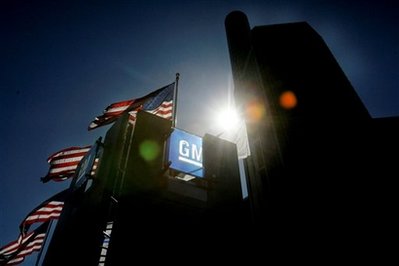 By George Friedman ~ Honorary Political Season Contributor
The G-20 met last Saturday. Afterward, the group issued a meaningless statement and decided to meet again in March 2009, or perhaps later. Clearly, the urgency of October is gone. First, the perception of imminent collapse is past. Politicians are superb seismographs for detecting impending disaster, and these politicians did not act as if they were running out of time. Second, the
Given the sense in Europe that this financial crisis marked the end of
From Financial Crisis to Cyclical Recession
The financial crisis has been mitigated, if not solved. The problem now is that we are in a cyclical recession, and that every country is trying to figure out how to cope with the recession. Unlike the past two recessions, this one is more global than local. But unlike the 1970s, when recession was global, this one is not accompanied by soaring inflation and interest rates.
All recessions have different dynamics, but all have one thing in common: They impose punishment and discipline on economies run wild. This is happening around the world.
If the world were all about economics, culling is what the Chinese would do. But the world is more complex than that. A culling would lead to massive unemployment. Many Chinese employees live on
Economic Restructuring vs. Stability
The Chinese have therefore prepared a massive stimulus package that is more of a development program to make up for declining
This is not only a Chinese problem. Wherever there is an economic downturn, politicians must decide whether society — and their own political futures — can withstand the rigors recessions impose. Recessions occur when, as is inevitable, inefficiencies and irrationalities build up in the financial and economic system. The resulting economic downturn imposes a harsh discipline that destroys the inefficient, encourages everyone to become more efficient, and opens the doors to new businesses using new technologies and business models. The year 2001 smashed the technology sector in the
The business cycle works well, but the human costs can be daunting. The collapse of inefficient businesses leaves workers without jobs, investors without money and society less stable than before. The pain needed to rectify
Every country in the world is looking inward at the impact of the recession on its economy and measuring its resources. Countries are deciding whether they have the ability to prop up business that should fail, what the social consequences of business failure would be, and whether they should try to use their resources to avoid the immediate pain of recession. This is why the G-20 ended in meaningless platitudes.
Each country is also trying to answer the question of how much pain it — and its regime — can endure. The more pain imposed, the healthier countries will emerge economically — unless of course the pain kills them. Ultimately, the rationality of economics and the reality of society frequently diverge.
Recession and the
For the
There can be endless discussions of why the
This is what recessions are supposed to do. As in
That sounds easy, but the transition actually will be a bloodletting. Current employees of both the automakers and suppliers will be devastated. Institutions that have lent money to the automakers will suffer massive or total losses. Pensioners might lose pensions and health care benefits, and an entire region of the
Here the economic answer, cull, meets the social answer, stabilize. Policymakers have a decision to make. If the automakers fail now, their drain on the economy will end; the pain will be shorter, if more intense; and new industries would emerge more quickly. But though their drain on the economy would end, the impact of the automakers’ failure on the economy would be seismic. Unemployment would surge, as would bankruptcies of many auto suppliers. Defaults on loans would hit the credit markets. In the
In the
The Recession in Context
The people arguing for postponement aren’t foolish. The financial system is still working its way through a massive crisis that had little to do with the auto industry. Some traction appears to be occurring; certainly there was no crisis atmosphere at the G-20 meeting. The economy is in recession, but in spite of the inevitable claims that we have never seen anything like this one before, we have. There is always some variable that swings to an extreme — this time, it is consumer spending — but we are still well within the framework of recent recessions.
Consider the equity markets, which we regard as a long-term measure of the market’s evaluation of the state of the economy. In January 2000, the S&P 500 peaked at 1,455. This was the top of the market. In July 2002, 18 months later, the S&P bottomed out at 935. Over the next five years it rose to 1,519 in July 2007, the height for this cycle. It fell from this point until Nov. 12, 2008, when it closed at 852.30. This past Friday, it was at 873.29.
We do not know what the market will do in the future. There are people much smarter than we are who claim to know that. What we do know is what it has done. And what it has done this time — so far — is almost exactly what it did last time, except that in 2000-2002 it took 18 months to do it, while this time it was done in about 16 and a half months (assuming it bottomed out Nov. 12). But even if the market didn’t bottom out then, and it falls to 775, for example, it will have lost 50 percent of its value from the peak. This would be more than in 2000-2002, but not unprecedented.
The point we are making here is that if we regard the equity markets as a long-term seismograph of the economy, then so far, despite all the storm and stress, the markets — and therefore the economy — remain within the general pattern of the 2000-2002 market at the 2001 recession. That recession certainly was unpleasant, what with the devastation of the tech sector, but the economy survived. At the same time, however, it is clear that things are balanced on a knife’s edge. Another hundred points’ fall on the S&P, and the markets will be telling us that the world is in a very different place indeed.
A massive bankruptcy in the automotive sector could certainly set the stage for an economic renaissance in the next generation. But at this particular moment in time (it’s no coincidence that the crisis in the
There is a powerful counterargument to bailing out the
The only possible solution would be a bailout followed by a Washington-administered restructuring of the auto industry. This causes us to imagine a collaboration between the auto industry’s current management and Washington administrators that would finally put
The geopolitical problem confronting the world at the moment is that it has been forced to offer massive support to the global financial system with sovereign wealth — e.g., via taxes and currency printing presses. The world might just have squeaked through that crisis. Now, the world is in an inevitable recession and businesses are on the brink of failure. A wave of massive business failures on top of the financial crisis might well move the global system to a very different place. Therefore, each nation, by itself and indifferent to others, is in the process of figuring out how to postpone these failures to a more opportune time — or to never. This will build in long-term inefficiencies to the global economy, but right now everyone will be quite content with that.
Thus the financial crisis became a recession, and the recession triggered bankruptcies. And because no one wants bankruptcies right now, everyone who can is using taxpayer dollars to protect the taxpayer from the consequences of mismanagement. And the last thing any one cared about was the G-20 concept for the future of the economic system.
November 12, 2008
Bailing Out Detroit: Obama's Lose Lose Proposition
 President Elect Obama was elected with a tremendous level of support from labor unions and they didn't do that for nothing. Unions have every expectation that their priorities will be addressed, chief among them looming large and in charge on the horizon, a bailout of the Detroit Dinosaur Triad. The Dinosaur Triad wants a $25 billion dollar "bridge loan", basically sidling up next to the Wall Street beggars crying poor mouth and hollering "me too".
From our man on the street perspective, this situation is why you have to ask Obama, why do you want this job? Basically, this seems like a lose lose deal. Do it, and you can bet that the Dinosaur Triad won't be the last industry to come rooting in the taxpayer trough. Where does it stop? And with every industry that gets a taste while the electorate watches friends and neighbor's mortgages one after the other bite the dust when their jobs go puff like smoke, the voter's anger will increase as we ask the reasonable question, "so where's my bailout? I made a bad decision or two, some honest mistakes and now I'm hurting pretty bad. Where's the help for me?".
Don't do it, and a major constituency, labor unions and the working class folk they connect to, take the hit as the Dinosaur Triad burns through its remaining cash in the next six months and begins laying off thousands and shuttering plants at home and abroad. Ditto for the industry of suppliers to the Dinosaur Triad too. The effect will ripple through the economy and across the kitchen tables of Joe and Jamaal Sixpack with the family destroying force of a nuclear blast wave. And with every family that takes it on the chin, flying apart in economic meltdown, divorce and family dysfunction maxed out by financial disaster, the voter's anger will increase as we ask the reasonable question, "so where's my bailout? I made a bad decision or two, some honest mistakes and now I'm hurting pretty bad. Where's the help for me?".
How in the world does Obama thread this needle? Economists and free market fiscal conservatives say, let the Triad die, the Phoenix that will arise from the ashes will be stronger and better, but there is no doubt that letting Detroit and the millions who make their livelihood from that industry implode by inaction would be political suicide as the labor unions and their followers turn and savage Obama like rabid dogs. Liberals and progressives will say save it, but that means our multi-trillion dollar deficit continues to grow like the blob, gorging and gobbling up our fiscal health and insuring our status as a debtor nation to the likes of China and the petro kingdoms continues for decades. I got family that works in the industry and I'll bet many of you do too, so this is personal.
What do we do?
October 2, 2008
We're Being Had and Here's the Proof - Call Congress and Tell Them - No Bailout!
Hat tip Politics After 50
Verification of the con game being run on the American taxpayer by Paulson and his Wall Street cronies comes via the contents of a secret conference call meeting on Sunday, Sept. 28th between Treasury Department officials and some 800 financial services industry insiders where they talk about how the additions to the bill that the Democrats "fought for" are just shams (CEO pay caps, metering out the $700 billion in smaller chunks, etc.). They can ALL be ignored or worked around.
Notes compiled by the blog Naked Capitalism are below on the call. Also, give THIS a read, watch the video below and then CLICK HERE TO SEND A LETTER TO YOUR CONGRESSMAN RIGHT NOW and tell them no way on this bailout con job.
The call:
Memo found at: http://dealbreaker.com/2008/09/treasury-to-hold-conference-ca.php
MEMORANDUM
TO: SIFMA Government Reps Committee
FR: SIFMA Washington Office
DA: September 28, 2008
RE: Conference Call w. Treasury / 9:00PM TONIGHT
At 9:00pm tonight, Sunday, September 28th, there will be a call with Treasury officials
to discuss the Troubled Asset Recovery Plan. This call is specifically for analysts.
Please distribute ASAP to analysts in your firm who might be interested in participating.
We have also distributed this call notice through various SIFMA Committees to solicit analyst
participation.
Please find the conference call information below:
Date: Sunday, September 28th
Time: 9:00PM ET
Toll-free Dial-in: 1-866-843-0890
Entry Code: 1812173#
Download the bit torrent recording of the call. The call has also been posted to Youtube in five parts.
There is a live blogging recap of the call at Dealbreaker.
Notes on the call from courtesy of Naked Capitalism:
1. The tranching is a mere formality, and the Treasury boys as much as
said so. They could take the $700 billion max as soon as the bill has
passed,
2. However, they do not plan any action immediately,
will wait a couple of weeks. They want to focus their efforts on
stronger companies but also made noise about protecting the financial
system. This, by the way, is the Japanese convoy system all over.
3.There seemed to be a lot of tap dancing about what price they will pay
for assets and no straight answer about their policy on warrants. They
did say that if the amount sold was greater than $100 million, they
would take warrants. FYI, the current draft allows them to pay up to
the price at which the assets were initially booked (yikes) . I wonder
if this is obfuscation, if they have an idea of what the plan to do but
will not admit it in any public forum.
4. As the person who
listened to the call stressed, DealBreaker wasn't clear on the
bifurcated process. If you come to the Treasury and you are in trouble,
you get reamed. Bear/AIG style treatment, execs probably fired. But if
you participate on a voluntary basis, the intent is to make it very
user friendly. That is consistent with Paulson's position during the
negotiations.
5. The exec comp provisions sound like a joke,
They DO NOT affect existing contracts, they affect only contracts
entered into during the two years of the authority of this program and
then affect only golden parachutes. More detail on that point, but I
don't need more detail to get the drift of the gist.
Additional notes from the call compiled by Naked Capitalism:
1) If even the Treasury is saying tranching is a formality, then it really is nothing. Not sure why Dems fought so hard for a fig leaf.
2) Waiting a couple of weeks because no one has any idea when or where the next bomb will blow up. In other words, all their doomsday scenarios about Black Monday were B.S. They screamed the check had to be written by Monday, but now they're saying they actually have a few weeks before they need to cash it. Plus, this will allow them to "seek guidance" from GS, JPM, and other selfless public servants about where the money should be funneled.
3. The tap dancing is because they don't want it to get out that they'll be giving a sweetheart deal. The public won't be following each individual transaction to see exactly what price is being paid. So ridiculously overpriced asset sales can be hidden in the details, and by the time some reporter (or blogger :-) combs through and analyzes the transactions, the deed will have been done. But if Paulson makes a statement that assets will be bought at par before the bailout's even begun, that will be reported and might kill the deal.
4. In other words, we need to sweeten the pot to encourage banks to come "voluntarily". Pardon my ignorance, but why the hell should we be begging banks to borrow from us? I thought a bailout should be the absolute last option for a bank. I.e., it should be so unpalatable, so unprofitable for a bank and its executives that they exhaust every private means of survival before coming for their public "reaming". I wonder if foreclosed homeowners would rate their foreclosure process as "user friendly".
5. Of course the exec comp provisions are a joke. Who do you think is going to be hiring all those banking cmte staffers and newly retired congresspeople next year during the inevitable post-election turnover? Do you really think they're going to vote to limit their salaries?
Verification of the con game being run on the American taxpayer by Paulson and his Wall Street cronies comes via the contents of a secret conference call meeting on Sunday, Sept. 28th between Treasury Department officials and some 800 financial services industry insiders where they talk about how the additions to the bill that the Democrats "fought for" are just shams (CEO pay caps, metering out the $700 billion in smaller chunks, etc.). They can ALL be ignored or worked around.
Notes compiled by the blog Naked Capitalism are below on the call. Also, give THIS a read, watch the video below and then CLICK HERE TO SEND A LETTER TO YOUR CONGRESSMAN RIGHT NOW and tell them no way on this bailout con job.
The call:
Memo found at: http://dealbreaker.com/2008/09/treasury-to-hold-conference-ca.php
MEMORANDUM
TO: SIFMA Government Reps Committee
FR: SIFMA Washington Office
DA: September 28, 2008
RE: Conference Call w. Treasury / 9:00PM TONIGHT
At 9:00pm tonight, Sunday, September 28th, there will be a call with Treasury officials
to discuss the Troubled Asset Recovery Plan. This call is specifically for analysts.
Please distribute ASAP to analysts in your firm who might be interested in participating.
We have also distributed this call notice through various SIFMA Committees to solicit analyst
participation.
Please find the conference call information below:
Date: Sunday, September 28th
Time: 9:00PM ET
Toll-free Dial-in: 1-866-843-0890
Entry Code: 1812173#
Download the bit torrent recording of the call. The call has also been posted to Youtube in five parts.
There is a live blogging recap of the call at Dealbreaker.
Notes on the call from courtesy of Naked Capitalism:
1. The tranching is a mere formality, and the Treasury boys as much as
said so. They could take the $700 billion max as soon as the bill has
passed,
2. However, they do not plan any action immediately,
will wait a couple of weeks. They want to focus their efforts on
stronger companies but also made noise about protecting the financial
system. This, by the way, is the Japanese convoy system all over.
3.There seemed to be a lot of tap dancing about what price they will pay
for assets and no straight answer about their policy on warrants. They
did say that if the amount sold was greater than $100 million, they
would take warrants. FYI, the current draft allows them to pay up to
the price at which the assets were initially booked (yikes) . I wonder
if this is obfuscation, if they have an idea of what the plan to do but
will not admit it in any public forum.
4. As the person who
listened to the call stressed, DealBreaker wasn't clear on the
bifurcated process. If you come to the Treasury and you are in trouble,
you get reamed. Bear/AIG style treatment, execs probably fired. But if
you participate on a voluntary basis, the intent is to make it very
user friendly. That is consistent with Paulson's position during the
negotiations.
5. The exec comp provisions sound like a joke,
They DO NOT affect existing contracts, they affect only contracts
entered into during the two years of the authority of this program and
then affect only golden parachutes. More detail on that point, but I
don't need more detail to get the drift of the gist.
Additional notes from the call compiled by Naked Capitalism:
1) If even the Treasury is saying tranching is a formality, then it really is nothing. Not sure why Dems fought so hard for a fig leaf.
2) Waiting a couple of weeks because no one has any idea when or where the next bomb will blow up. In other words, all their doomsday scenarios about Black Monday were B.S. They screamed the check had to be written by Monday, but now they're saying they actually have a few weeks before they need to cash it. Plus, this will allow them to "seek guidance" from GS, JPM, and other selfless public servants about where the money should be funneled.
3. The tap dancing is because they don't want it to get out that they'll be giving a sweetheart deal. The public won't be following each individual transaction to see exactly what price is being paid. So ridiculously overpriced asset sales can be hidden in the details, and by the time some reporter (or blogger :-) combs through and analyzes the transactions, the deed will have been done. But if Paulson makes a statement that assets will be bought at par before the bailout's even begun, that will be reported and might kill the deal.
4. In other words, we need to sweeten the pot to encourage banks to come "voluntarily". Pardon my ignorance, but why the hell should we be begging banks to borrow from us? I thought a bailout should be the absolute last option for a bank. I.e., it should be so unpalatable, so unprofitable for a bank and its executives that they exhaust every private means of survival before coming for their public "reaming". I wonder if foreclosed homeowners would rate their foreclosure process as "user friendly".
5. Of course the exec comp provisions are a joke. Who do you think is going to be hiring all those banking cmte staffers and newly retired congresspeople next year during the inevitable post-election turnover? Do you really think they're going to vote to limit their salaries?
October 1, 2008
The Jaundiced Eye of a Citizen or Kill the Bailout
Earlier this evening, Senators McCain and Obama voted for the Paulson bailout plan in the Senate, a plan essentially unchanged in its primary offensiveness from what Paulson originally proposed. We oppose the bailout. Intervention is necessary, but this is not the right solution set. Someone on POTUS 08 likened it to a fleet of ships on a lake. Some of them are sinking, and the response is to blow up the dam and drain the lake. The plan itself is the wrong solution and worse still, it is a wrong solution that will be implemented by the administration with some meddling by Congress, both of whom in the aggregate are a bunch of bumbling cretins.
Hunter @ Daily Kos captures my own sense of outrage well:
".....what this week has demonstrated more than anything else is that I, at least, have absolutely zero trust left that members of congress or the administration or the talking heads on the cable channels will ever, if left to their own devices, do the right thing.
I have lost absolutely all faith that any politician, anywhere, under any circumstances, when faced with the immediate presence of a lobbyist for the corporate world but only the vague, abstract premise of a public to be served, would make the right choice.
The underlying problem -- and you can think back on that lovely Bush administration interpretation of the "signing statement," for an example here -- is that whatever this $700 billion dollar bill looks like, it's going to be implemented in practice by some of the most corrupt and incompetent jackasses ever to grace the halls of power. We're talking about nearly a trillion dollars of money we don't have, which we are going to be indebted for into the far-distant future, to do nothing but patch the most immediate structural flaw of a market that, even when the flaw is patched, will be only barely functional."
This bailout is a sham solution to solve the self inflicted money problems of Wall Street firms unwilling to live with the consequences of their actions. Yes, there is a problem within the financial system, but there are prudent interventions to address that problem that do not carry the risks and pitfalls of the Bush-Paulson plan. We, the public, are being conned via the use of a false sense of emergency and crisis. Our legislators are being stampeded into providing a taxpayer funded windfall to the financial sector and they are either to stupid, too corrupt and bought off, or both to resist the siren call of Paulson and the lobbyists to pass this abomination of a bill. That goes for McCain and Obama too.
The American public knows its getting screwed. We've been communicating that to our legislators, but too many of them, aided by complicit media conglomerates, have decided that the public is too stupid to understand the problem. The fact is that our instincts that are screaming "this is BS" are right on the money. Call your legislators in the House and tell them don't pass the Paulson plan. Call your Senators and thank them if they voted no and to complain if they voted yes.
Hunter @ Daily Kos captures my own sense of outrage well:
".....what this week has demonstrated more than anything else is that I, at least, have absolutely zero trust left that members of congress or the administration or the talking heads on the cable channels will ever, if left to their own devices, do the right thing.
I have lost absolutely all faith that any politician, anywhere, under any circumstances, when faced with the immediate presence of a lobbyist for the corporate world but only the vague, abstract premise of a public to be served, would make the right choice.
The underlying problem -- and you can think back on that lovely Bush administration interpretation of the "signing statement," for an example here -- is that whatever this $700 billion dollar bill looks like, it's going to be implemented in practice by some of the most corrupt and incompetent jackasses ever to grace the halls of power. We're talking about nearly a trillion dollars of money we don't have, which we are going to be indebted for into the far-distant future, to do nothing but patch the most immediate structural flaw of a market that, even when the flaw is patched, will be only barely functional."
The American public knows its getting screwed. We've been communicating that to our legislators, but too many of them, aided by complicit media conglomerates, have decided that the public is too stupid to understand the problem. The fact is that our instincts that are screaming "this is BS" are right on the money. Call your legislators in the House and tell them don't pass the Paulson plan. Call your Senators and thank them if they voted no and to complain if they voted yes.
September 30, 2008
Be Bold Obama. Oppose the Bailout

Hat tip to Race42008 who bring us this from Mark Levin;
"From an economic perspective, if the problem is liquidity and credit, there simply is no need for the federal government to assume massive amounts of debt on its book by assuming loans in anticipation that their holders or borrowers will default. This seems to me like a brand new expanse of government power that is not justified (if it ever is) by the arguments made on its behalf."
"But the Soviet-style, top-down five year plan a la Paulson’s proposal, and to a significant extent the proposal that was voted down yesterday, could easily do more damage to both the economy and our governmental structure."
Dave G, on the same site hits the nail on the head for me
"It’s been 24 hours since the bailout failed and still no Hoovervilles. Someone on this site who understands economics needs to seriously explain to me why this thing is even needed, and why what Levin is proposing regarding liquidity and credit won’t suffice. Because to my untrained economic eye, it seems that the bailout panic has a lot to do with a few people trying to get the rest of us to bail them out of bad risks they took, and very little to do with the health of our national or global economy."
I completely concur. So Obama has an opportunity to show a little independence from his party, show some leadership and put the brainpower on display.
I don't think we're gonna see that. I think Obama is going to play it cagey and safe and milk McCain's missteps for the maximum mileage he can. If you assume that a Paulson style bailout is necessary, then this can be regarded as the cynical strategy of a politician. If you assume that Obama is betting that the economic crisis has in fact been overblown and we will not go into meltdown on some immediate basis, its a shrewd bet that he has time to play it out and let McCain and the republicans continue to absorb the punishment they are taking. Considering that most of main street America don't want this thing and are shouting it down, its a safe bet.
Republicans are fighting back with a major push on the sins of the democrats in not reigning in Fannie and Freddie. But 32 days is not necessarily enough time to lay the blame for the bailout on the democrats. Look for this line of attack to be pursued heavily in the next presidential debate and expect VP Palin to come armed with it on Thursday. Obama had better have answers to deflect those attacks if he wants to prevent McCain for gaining ground on him with the issue.
September 27, 2008
Wow. Poor People Caused the Financial Crisis - Who Knew?
This is the kind of crap I find despicable, essentially pushing an idea that welching poor people are the cause of the crisis. By using the labeling of "poor people", it permits a sort of lazy stereotyping to provide easy scapegoats. Under this political argument scheme, homebuyers become a new brand of welfare recipients which the government forced big, Wall Street banks into lending to.
Its an overstatement of the role of CRA, an understatement of Wall Streets culpability in creating exotic credit default swaps and derivatives and other opaque and unregulated financial instruments, and a stereotyping and scapegoating of regular people doing one of the most American things we do; buying a home to raise a family and become investors in the American way of life.
September 26, 2008
September 22, 2008
Newt on the Bailout Plan
Hat Tip Hot Air.
Before D.C. Gets Our Money, It Owes Us Some Answers [Newt Gingrich]
We are being told Treasury Secretary Henry Paulson has a plan which will shift $700 billion in obligations from private companies to the taxpayer.
We are being warned that this $700 billion bailout is the only answer to a crisis.
We are being reassured that we can trust Secretary Paulson "because he knows what he is doing".
Congress had better ask a lot of questions before it shifts this much burden to the taxpayer and shifts this much power to a Washington bureaucracy.
Imagine that the political balance of power in Washington were different.
If this were a Democratic administration the Republicans in the House and Senate would be demanding answers and would be organizing for a “no” vote.
If a Democratic administration were proposing this plan, Republicans would realize that having Connecticut Democratic senator Chris Dodd (the largest recipient of political funds from Fannie Mae and Freddie Mac) as chairman of the Banking Committee guarantees that the Obama-Reid-Pelosi-Paulson plan that will emerge will be much worse as legislation than it started out as the Paulson proposal.
If this were a Democratic proposal, Republicans would remember that the Democrats wrote a grotesque housing bailout bill this summer that paid off their left-wing allies with taxpayer money, which despite its price tag of $300 billion has apparently failed as of last week, and could expect even more damage in this bill.
But because this gigantic power shift to Washington and this avalanche of taxpayer money is being proposed by a Republican administration, the normal conservative voices have been silent or confused.
It’s time to end the silence and clear up the confusion.
Congress has an obligation to protect the taxpayer.
Congress has an obligation to limit the executive branch to the rule of law.
Congress has an obligation to perform oversight.
Congress was designed by the Founding Fathers to move slowly, precisely to avoid the sudden panic of a one-week solution that becomes a 20-year mess.
There are four major questions that have to be answered before Congress adopts a new $700 billion burden for the American taxpayer. On each of these questions, I believe Congress’s answer will be “no” if it slows down long enough to examine the facts.
Question One: Is the current financial crisis the only crisis affecting the economy?
Answer: There are actually multiple crises hurting the economy.
There is an immediate crisis of liquidity on Wall Street.
There is a longer time crisis of a bad energy policy transferring $700 billion a year to foreign countries (so foreign sovereign capital funds are now using our energy payments to buy our companies).
There is a longer term crisis of Sarbanes-Oxley (the last "crisis"-inspired congressional disaster) crippling entrepreneurial start ups, driving public companies private, driving smart business people off public boards, and driving offerings from New York to London.
There is a long term crisis of a high corporate tax rate driving business out of the United States.
No solution to the immediate liquidity crisis should further cripple the American economy for the long run. Instead, the liquidity solution should be designed to strengthen the economy for competition in the world market.
Question Two: Is a big bureaucracy solution the only answer?
Answer: There is a non-bureaucratic solution that would stop the liquidity crisis almost overnight and do it using private capital rather than taxpayer money.
Four reform steps will have capital flowing with no government bureaucracy and no taxpayer burden.
First, suspend the mark-to-market rule which is insanely driving companies to unnecessary bankruptcy. If short selling can be suspended on 799 stocks (an arbitrary number and a warning of the rule by bureaucrats which is coming under the Paulson plan), the mark-to-market rule can be suspended for six months and then replaced with a more accurate three year rolling average mark-to-market.
Second, repeal Sarbanes-Oxley. It failed with Freddy Mac. It failed with Fannie Mae. It failed with Bear Stearns. It failed with Lehman Brothers. It failed with AIG. It is crippling our entrepreneurial economy. I spent three days this week in Silicon Valley. Everyone agreed Sarbanes-Oxley was crippling the economy. One firm told me they would bring more than 20 companies public in the next year if the law was repealed. Its Sarbanes-Oxley’s $3 million per startup annual accounting fee that is keeping these companies private.
Third, match our competitors in China and Singapore by going to a zero capital gains tax. Private capital will flood into Wall Street with zero capital gains and it will come at no cost to the taxpayer. Even if you believe in a static analytical model in which lower capital gains taxes mean lower revenues for the Treasury, a zero capital gains tax costs much less than the Paulson plan. And if you believe in a historic model (as I do), a zero capital gains tax would lead to a dramatic increase in federal revenue through a larger, more competitive and more prosperous economy.
Fourth, immediately pass an “all of the above” energy plan designed to bring home $500 billion of the $700 billion a year we are sending overseas. With that much energy income the American economy would boom and government revenues would grow.
Question Three: Will the Paulson plan be implemented with transparency and oversight?
Answer: Implementation of the Paulson plan is going to be a mess. It is going to be a great opportunity for lobbyists and lawyers to make a lot of money. Who are the financial magicians Paulson is going to hire? Are they from Wall Street? If they’re from Wall Street, aren't they the very people we are saving? And doesn’t that mean that we’re using the taxpayers’ money to hire people to save their friends with even more taxpayer money? Won't this inevitably lead to crony capitalism? Who is going to do oversight? How much transparency is there going to be? We still haven't seen the report which led to bailing out Fannie Mae and Freddie Mac. It is "secret". Is our $700 billion going to be spent in "secret" too? In practical terms, will a bill be written in public so people can analyze it? Or will it be written in a closed room by the very people who have been collecting money from the institutions they are now going to use our money to bail out?
Question Four: In two months we will have an election and then there will be a new administration. Is this plan something we want to trust to a post-Paulson Treasury?
Answer: We don’t know who will inherit this plan.
The balance of power on election day will shift to either McCain or Obama. Who will they pick for Treasury Secretary? What will their allies want done? We are about to give the next administration a level of detailed control over big companies on a scale even FDR did not exercise during the Great Depression. Is this really wise?
For these reasons I hope Congress will slow down and have an open debate.
And in the course of that debate, I hope someone will introduce an economic recovery act that makes America a better place to grow jobs. I hope the details will be made public before the vote.
For more details on my action plan for getting the American economy back on track and building long-term economic prosperity, you can read this message recorded yesterday to American Solutions members.
This is a very important week for the integrity of the Congress.
This is a very important week for the future of America.
If Washington wants our money, then it owes us some answers.
Subscribe to:
Posts (Atom)