If you pumped into my bank account the tens of billions of dollars the Bush and now the Obama administration have pumped into the banks, I'd show a profit too. How can these so-called "profits" be taken seriously?
Update: Oh yeah, I forgot to mention that banks are also borrowing from the Fed at 0% and selling at 4-7%. Again, give me some of that action and I'll turn a profit too.
Showing posts with label economy. Show all posts
Showing posts with label economy. Show all posts
April 20, 2009

March 22, 2009
Obama's Plan to Save the Financial System Likely to Help Destroy It
Obama's Treasury Secretary is scheduled to roll out the administration's plan to save the financial system tomorrow. The complete details of the plan have now been leaked and reaction is beginning to trickle in. By tomorrow it will be a flood of feedback. The advance take on the plan is that its bad, very bad. Obama was on 60 Minutes pledging his full support of Geithner and he may come to eat those words and soon. What Geithner is coming out with is looking like victory for the zombie banks. The folks at Naked Capitilism, who understand this stuff much better than I, led off with a post titled Investor on Private Public Partnership: "One would have to be a criminal to participate in this". Neville, a commenter on this post, broke it down to laymans terms like this:
Does anybody remember that the last people who brought in 3% equity partners to take control of an off-balance sheet hedge fund in a no-loss deal designed solely to absorb toxic assets at inflated prices, were sent to jail by the government for misleading the public? Their names were Andrew Fastow, Jeffrey Skilling and a raft of other managers, at Enron.
The goal of their off balance sheet partnerships was to conceal where and when the real losses had occurred and thus who was responsible for them, until some later date when they could either be transferred back onto the public (Enron's shareholders) in a way they would not notice, or at least after the Enron managers had a chance to unload their shares.
Now we have a virtually identical scheme, but this time it's being promoted jointly by the banks and the US Treasury. Once again the effort is to construct a vehicle into which toxic assets can be transferred at inflated prices, positioning the public to take the losses while disguising them in the short term, and giving the managers of our biggest banks a chance to both profit now and then sell out ahead of the public.
I know very little about high finance, but this analysis resonates with my gut. If we're lucky, the administration can be turned from this course. If we're lucky, the GOP will do more than simply say no, they will come forward with a better plan (note that does not mean ideologically correct) and fight for it.
February 11, 2009
US Was on Edge of Economic Armageddon
So says Rep. Paul Kanjorski (D) PA, who was there for the briefings by Paulson and Bernake back in September.
I was there when the secretary and the chairman of the FederalReserve came those days and talked to members of Congress about what was going on... Here's the facts. We don't even talk about these things.On Thursday, at about 11 o'clock in the morning, the Federal Reserve noticed a tremendous drawdown of money market accounts in the United States to a tune of $550 billion being drawn out in a matter of an hour or two.The Treasury opened up its window to help. They pumped $105 billion into the system and quickly realized that they could not stem the tide. We were having an electronic run on the banks.They decided to close the operation, close down the money accounts,and announce a guarantee of $250,000 per account so there wouldn't be further panic and there. And that's what actually happened.If they had not done that their estimation was that by two o'clockthat afternoon, $5.5 trillion would have been drawn out of the money market system of the United States, would have collapsed the entire economy of the United States, and within 24 hours the world economy would have collapsed.Now we talked at that time about what would have happened if that happened. It would have been the end of our economic system and our political system as we know it.....Half of America is very wary of the TARP bailout and the other half loathes it and nobody understands the logic going into it. Is it just me, or would it have made a whole lot of sense for there to have been some disclosure of these facts to the public so that there was at least some understanding in the body politic that there was an urgency and an emergency. If the economy is still essentially on as shaky a foundation now as it was apparently in Sept. (if Kanjorski is taken at his word) then Obama's warnings of imminent disaster if the recovery bill is not passed swiftly are far from the "fear mongering" its been branded on the right from Redstate to Rush. While you might still disagree with Obama's characterization, in the context revealed by Kanjorski's comments, you can't fault him for pressing the case in those tones.Ya know, we're not any geniuses in economics or finances... We're representatives of people. We ought to take our time, but let the people know this is a very difficult struggle. Somebody threw us into the middle of the Atlantic Ocean without a life raft and we're trying to determine what's the closest shore and whether there's any chance in the world to swim that far. We. Don't. Know.
February 10, 2009
Netflix CEO to President Obama: "Please Raise My Taxes"
 Netflix CEO to President Obama: "Please Raise My Taxes"
My father would say "he must be on dogfood". I am a loyal and happy Netflix subscriber and I happen to think Hastings is a great guy, but this is an inordinately stupid thing to say, and more importantly, he does not really mean it.
Hastings makes a million dollars a year, but the bottom line is that he doesn't really mean he wants the government to take half of that hard earned money right off the top. And while my fellow brethren think Obama wants all the money and the first born too, we are never going to have fifty percent taxation, so it does not even have the cache of being a bold thing to say. He's never going to have to do it, so there is no downside to being ridiculous in this fashion.
Exit thought: Reed, if you're really that pumped to give up half your dough for the good of the country, why don't you just send the $500k my way. I'll put it to good use stimulating the economy.
February 5, 2009
Pro-Black People Policy Alert: Support Republican low-rate mortgage proposal
 Republicans push low-rate mortgage in U.S. stimulus | Economy | Reuters
Mitch McConnel is pushing for a provision in the stimulus bill that would drive down mortgage rates to 4%. 30 year mortgages at that price point would make it easier to purchase a home and for people who refinanced, could save them thousands of dollars over the course of a year of mortgage payments. This is a Political Season Pro Black People Policy Alert
Why should black folks support such a provision? Because the last decade or so has seen a tremendous growth in home ownership and homeonwership remains a traditional path to generational wealth building for the vast majority of Americans. This is perhaps even more true for blacks. The economic downturn is wiping out hard earned wealth gains among blacks as financially devasted families lose their homes. Before this is all over, blacks may lose two generations of wealth gains. A provision such as this one is very much in the interest of black folks to support. Think of it like a 30 year tax break that puts money in your pocket from the get. The even better aspect of this is that it costs the government very little to do it. Because of the economic crisis, investors are parking their money in US Treasury bills as the safest place to keep it for now, which means the government can borrow huge amounts of money at very low rates, like 3%. If they relend that money at 4%, they pass on the benefit of that low cost money to homeowners and the government even makes a little change on the spread. No deficit hit. Its a win win.
Not only should blacks support insertion of this into the stimulus bill though, we need to push a little further in terms of implementation. Many black folk who got mortgages in the last several years got put into sub prime loan products. Sometimes because that was the risk profile of the borrower, but sometimes despite the fact that they could have gotten into a conforming loan. Either way, those mortgages ranging anywhere from 8-11%, are draining black folk dry as they pay these heavy financing costs and leaving even more people exposed to foreclosure, which costs everyone. In addition, I suspect that people who are in sub prime products are more likely to spend the savings they get from refinancing, thereby stimulating the economy with their spending, which is in fact the whole point. This proposal in my view gets even better in terms of impact on black folks if provision is made to get people out of high cost sub prime loan products.
Now, the Heritage Foundation does not like it, and I actually agree with them with regard to doing this to stimulate home sales. Mortgage rates are already quite low, so I think this provision is of marginal benefit on that front. Their other major contention is that its an income transfer from the financial sector to homeowners who don't really need it, which feels more like an ideological issue that does not help anybody per se, which is why I think the additional twist ought to be providing relief to those stuck in sub prime products. Considering how much income in the form of taxpayer dollars has been transferred INTO the financial sector, I really don't think its a problem to let some of that circulate back where it came from in the first place.
With a tweak or two, I think this is a good idea and firmly in the interest of black folks to support. Its action time. Call and email your senator and your represenative and the White House. Tell them you support the republican proposal AND that you want provision to be made to make these low cost mortgages available to people stuck in sub prime loan products. Use the links above, get their phone number and call their office now. Ask for the legislative assistant working on housing or on the stimulus and tell them you support Mitch McConnel's proposal for lowering mortgage rates AND that provisions should be made for people stuck in high cost sub prime mortgage products to refinance out of them, because those people are likely to circulate those savings back into the economy, increasing stimulus. Do it now, do it today.
January 13, 2009
Children can be so wonderfully prescient....
"Why don't they just print more money?"
- My nine year old daughter, Lydia, in response to her mother's explanation of the economic crisis.
December 18, 2008
Falling Fortunes, Rising Hopes and the Price of Oil
 Oil prices have now dipped — albeit only briefly — below US$40 a barrel, a precipitous plunge from their highs of more than US$147 a barrel in July. Just as high oil prices reworked the international economic order, low oil prices are now doing the same. Such a sudden onset of low prices impacts the international system just as severely as recent record highs.
But before we dive into the short-term (that is, up to 12 months) impact of the new price environment, we must state our position in the oil price debate. We have long been perplexed about the onward and upward movement of the oil markets from 2005 to 2008. Certainly, global demand was strong, but a variety of factors such as production figures and growing inventories of crude oil seemed to argue against ever-increasing prices. Some of our friends pointed to the complex world of derivatives and futures trading, which they said had created artificial demand. That may well have been true, but the bottom line is that, based on the fundamentals, the oil numbers did not make a great deal of sense.
Things have clarified a great deal of late. We are now facing an environment in which the United States, Europe and Japan are in recession, while China is, at the very least, expecting to see its growth slow greatly. Demand for crude the world over is sliding sharply even as the Organization of the Petroleum Exporting Countries (OPEC) member states so far seem unable (or, in the case of Saudi Arabia, perhaps unwilling) to make the necessary deep cuts in output that might halt the price slide. The bottom line is that, while the breathtaking speed at which prices have collapsed has caught us somewhat by surprise, the direction and the depth of the plunge has not.
Prices are likely to remain low for some time. Most of the world’s storage facilities — such as the U.S. Strategic Petroleum Reserve — are full to the brim, so large cuts are needed simply to prevent massive oversupply. Yet any OPEC production cuts — the cartel meets Dec. 17 and deep cuts are expected — will take months to have a demonstrable impact, especially in a recessionary environment. And there is the simple issue of scale. The global oil market is a beast: Total demand at present is about 86 million barrels per day. This is not a market that can turn on a dime. A firm fact that flies in the face of conventional wisdom is that oil actually falls far faster than it rises when the fundamentals are out of whack. This has happened on multiple occasions, and not that long ago.
Falls occurred both in the aftermath of the 1990-1991 Persian Gulf War and as a result of the 1997-1998 Asian financial crises that were similar in percentage terms to the present drop. Until the balance between supply and demand is restruck — something not likely until a global economic recovery is well under way — there is no reason to expect a significant price recovery. The journey, of course, is not necessarily a one-way trip. Quirks in everything from weather to shipping to Nigerian riots and Russian military movements can set prices gyrating, but the fundamentals are clearly bearish. It will most likely take several months for the core features of the new reality to change much at all.

Low oil prices create both winners and losers on the international scene. First, the winners’ list.
Far and away the biggest winner from drastically lower prices is the world’s largest consumer and importer of oil: the United States. The last two years of high prices have spawned a sustained American consumer effort to get by with less oil via a mix of conservation and a shift to better-mileage vehicles. Whether this purchase pattern in automobiles lasts is not at issue. The point is that it has already happened: Many Americans have already shifted to more fuel-efficient vehicles. Just as the 1990s obsession with sport utility vehicles artificially boosted American gasoline demand so long as those automobiles were on the road, so the new fleet of hybrids and smart cars will push demand in the opposite direction for a sustained period.
Overall U.S. oil consumption has plummeted by nearly 9 percent from its peak in August 2007 to November 2008, according to the U.S. Department of Energy. Combining this with the drop in prices since July translates into U.S. energy savings of approximately US$1.95 billion at a price of US$50 a barrel and US$2.1 billion at a price of US$40 a barrel. And that is daily cost savings. In recessionary times, that cash will go a long way to building confidence and stanching the recession.
Next on the list are the major European importers of crude: Germany, Italy and Spain. As a rule, European economies are less energy-intensive than the United States, but by dint of fuel mix and lack of domestic production these three major states are forced to rely on substantial amounts of imported oil. We exclude the other major European economies from this list as they are either major oil producers themselves (the United Kingdom and the Netherlands) or their economies are extremely oil efficient (France, Belgium and Sweden). Don’t get us wrong — the EU states are all quite pleased that oil prices have dialed back. Nevertheless, in terms of relative gain, Germany, Italy and Spain are the real winners. And with Europe facing a recession much deeper and likely longer than that in the United States, the Europeans need every advant age they can get.
India, far removed from Europe culturally and geographically, sports a somewhat similar economic structure in that it boasts (or suffers from, based on your perspective) an industrializing base that is highly dependent on oil imports. Broadly, the Indians are in the same basket as Spain in that they are voracious energy consumers who have seen their demand skyrocket in recent years. Between the Nov. 26 Mumbai attack, upcoming federal elections and the energy price pain from earlier in the year, the government is desperate to pass on the cost savings to the population to shore up its support.
Then there are the East Asian states of South Korea, China and Japan (listed in descending order of how much each one benefits from the price drop). All import massive amounts of crude oil, but we put them at the end of the list of winners because of their financial systems. In East Asia — and particularly in China and Japan — money is not allocated on the basis of rate of return or profitability as it is in the West. Instead, the concern is maximizing employment. It does not matter much in East Asia if one’s business plan is sound; the government will provide cheap loans so long one employs hordes of people. One side effect of this strategy is that firms can get loans for anything, including raw materials they otherwise could not afford — such as oil at US$147 a barrel.
Therefore, high oil prices just do not affect East Asia as badly as they affect the West. Just as the East Asian financial system mutes the impact of high prices, the converse is true as well. In the West, energy consumers are not shielded from high prices, so lower prices immediately translate into more purchasing power, and thus more economic activity. Not so in East Asia, where the same financial shielding that blunts the impact of high prices lessens the benefits of low prices.
The order in which we listed the three Asian giants relates to how much progress they have made in reforming their financial practices. South Korea’s financial system is much closer to the Western model than the Asian model: South Korea hurts more as prices rise, and so will be more relieved as prices fall. China is in the middle in terms of financial practices, but it is also attempting to unwind its system of energy price-fixing as oil costs drop; due to subsidies being reduced, Chinese consumers actually may not be seeing much of a change in retail prices. Finally, Japan will benefit the least because its system is already highly efficient compared to the other two, so the price impact was less in the first place. One barrel of oil consumed in Japan generates approximately US$2,610 of Japanese gross domestic product (GDP), while the comparative figures for Korea and China are US$1,270 and US$1,130 respectively.
In short, the heavily industrialized Asians still benefit, but the impact isn’t as much as one might think at first glance. In fact, the biggest benefit to these states from cheaper energy is indirect — lower prices spur consumption in the West, and then the West purchases more Asian products.
And now, the losers.
Venezuela and Iran top this list by far. Both are led by politicians who have lavished vast amounts of oil income on their populations to secure their respective political positions. But that public approval has come at its own price in terms of economic dislocation (why diversify the economy if strong oil prices bring in loads of cash?), low employment (the energy sector may be capital-intensive, but it certainly is not labor-intensive), and high inflation (high government spending has led to massive consumption and spurred rampant import of foreign goods to satiate that demand).
Of the two states, Venezuela is certainly in the worse position. By some estimates, Venezuela requires oil prices in the vicinity of US$120 a barrel to maintain the social spending to which its population has become accustomed. Iran’s number may be only somewhat lower, but President Mahmoud Ahmadinejad is in the process of at least beginning to bow to economic reality. On Dec. 5, he announced massive cuts in subsidy outlays with the intent of reforging the budget based on a price of only US$30 a barrel.
It is an open question whether the Iranian government — and especially the increasingly unpopular Ahmadinejad — can survive such cuts (if they are indeed made), but at least there is a public realization of the depth of the crisis at the top level of government. In Venezuela, by contrast, the mitigation process has barely begun, and for political reasons it cannot truly be implemented until after a referendum in early 2009 on term limits that could allow Chavez to run for president indefinitely.
Next is Nigeria. In terms of seeing an increase in human misery, Nigeria should probably be at the top of the losers’ list. But the harsh reality is that Nigerians are used to corrupt government, inadequate infrastructure, spotty power supply and all-around poor conditions. Some of the perks of high energy prices undoubtedly will disappear, but none of those perks succeeded in changing Nigeria in the first place.
The real impact on Nigeria will be that the government will have drastically less money available to grease the political wheels that allow it to keep competing regional and personal interests in check. Those funds have been particularly crucial for funneling cash to the country’s oil-rich Niger Delta region, giving local bosses reason not to hire and/or arm militant groups like the Movement for the Emancipation of the Niger Delta to attack oil and natural gas sites. With Abuja having less cash, the oil regions will see a surge in extortion, kidnapping and oil bunkering (i.e., theft). We already have seen attacks ramp up against the country’s natural gas industry: Within the last few days, attacks against supply points have forced operators to take the Bonny Island liquefied natural gas export facility offline. And since Nigeria’s mil itants never really differentiate between the country’s various forms of energy export, oil disruptions are probably just around the corner.
Russia is also in the crosshairs, but not nearly to the same degree as Venezuela, Iran and Nigeria. Russia has four things going for it that the others lack. First, it exports massive amounts of natural gas and metals, giving it additional income streams. (Venezuela and Iran actually import natural gas and have no real alternative to oil income.) Second, Russia never spent its money on its population. Thus, Russians have not become used to massive government support, so there will be no sharp cuts in public spending that will be missed by the populace. Third, Russia has saved nearly every nickel it made in the past eight years, giving it cash reserves worth some US$750 billion. The financial crisis is hitting Russia hard, so at least US$200 billion of that buffer already has been spent, but Russia still remains in a far better position than m ost oil exporters. Fourth and last, the Russians can rely on Deputy Prime Minister and Finance Minister Alexei Kudrin to (somewhat forcefully) keep the books firmly in balance. At his insistence, the government is in the process of refabricating its three-year budget on the basis of oil prices of below US$35 a barrel, down from the original estimate of US$95.
At the end of the losers’ list we have two states that most people would not think of: Mexico and Canada. Both have other sources of economic activity. Canada is a modern service-based economy with a heavy presence of many commodity industries, while Mexico has become a major manufacturing hub. But both are major oil exporters, and have been leading suppliers to the American economy for decades. So both are exposed, but their concerns are more about unforeseen complications rather than the “simple” quantitative impact of lower prices.
Mexico has purchased derivatives contracts that, in essence, insure the price of all its oil exports for 2009. So should prices remain low, Mexico’s actual income will be unchanged. We only include Mexico on the list of losers, therefore, because it’s quite rare in geopolitics that such planning actually works out as planned. Hurricanes and strikes happen. (Mexico also faces the problem of insufficient funds, expertise and technology to counter rapidly declining output, something that will leave it with a lack of oil to sell in the first place — but that is an issue more for 2012 than 2009.)
As for Canada, most of the oil it produces comes from Alberta province, the seat of power of the ruling Conservative Party. Right now, the Canadian government is wobbling like a slowing top. Seeing the Conservatives’ power base take a massive economic hit due to oil prices is not the sort of complication the government needs right now. In the longer term, Alberta recently increased taxes on oil sands projects. Oil sands extraction is among the more capital-intensive and technologically challenging sorts of oil production currently possible. Combine the tax changes with the nature of the subindustry and the recent price drops and there is likely to be precious little investment interest in oil dur ing — at a minimum — 2009.
Most readers will take note of the countries we have chosen not to include on the list of vulnerable states. These include the bulk of the OPEC states — specifically Angola, Iraq, Kuwait, Saudi Arabia, the United Arab Emirates, Qatar and Libya. All of these states count oil as their only meaningful export (except the United Arab Emirates and Qatar, which also export natural gas), so why do we feel such countries are not in the danger zone?
For its part, Angola only became a major producer recently. Nearly all of Angolan oil output is from offshore projects controlled by foreigners — shutting in such production is a very tricky affair for a country that is utterly reliant on foreign technology to operate its only meaningful industry. But the primary reason Angola is not feeling the heat is that most of its income has not been spent but instead has been stashed away due to a lack of the necessary physical and personnel infrastructure needed to leverage the income.
Iraq is in a somewhat similar position as far as finances are concerned. While Iraq has been producing crude for decades, its current government is only a few years old, and its institutions simply cannot allocate the monies involved. Despite massive outlays by both Iraq and Angola, their respective governments simply lack the capacity to spend, and so have stored up cash accounts worth US$26 billion and US$54 billion respectively.
The rest of the Arab oil producers warrant a much simpler explanation: They’ve been fiscally conservative. While all have shared the wealth with their somewhat restive populations, none of them has repeated the mistakes of the 1970s, when they overspent on gaudy buildings and overcommitted themselves to expensive social programs. All have been saving vast amounts of cash, with the Saudis alone probably having more than US$1 trillion socked away. Tiny Kuwait officially has a wealth fund worth more than US$250 billion.
So while none of the Arab oil states are particularly thrilled with the direction — and in particular the speed — oil prices have gone, none of these governments faces a mortal danger at this time. What they are now missing is the ability to make a substantial impact on the world around them. At oil’s height the Gulf Arab oil producers were taking in US$2 billion a day in revenues — far more cash than they could ever hope to metabolize themselves. Bribes are powerful tools of foreign policy, and their income allowed them — particularly Saudi Arabia — to wield outsized influence in Iraq, Syria, Lebanon, and even in Beijing, London and Washington. So while none of these states faces a meltdown from falling prices, there are certainly some hangovers in store for them. It is jus t that they are more political than economic in nature, at least for now.
November 30, 2008
Postcards from the Economic Apocalypse
"If government is "for the people", then it needs to do its job. And in case anyone in the government has forgotten why they went to Washington, I will give you a news flash – your real job isn’t to feed us when we are on the bread lines, but to keep us off of them in the first place."
- Brown Man Thinking Hard
- Brown Man Thinking Hard
November 25, 2008
Obama: First Moves
 By George Friedman ~ Honorary Political Season Contributor
Three weeks after the U.S. presidential election, we are getting the first signs of how President-elect Barack Obama will govern. That now goes well beyond the question of what is conventionally considered U.S. foreign policy — and thus beyond Stratfor’s domain. At this moment in history, however, in the face of the global financial crisis, U.S. domestic policy is intimately bound to foreign policy. How the United States deals with its own internal financial and economic problems will directly affect the rest of the world.
One thing the financial crisis has demonstrated is that the world is very much America-centric, in fact and not just in theory. When the United States runs into trouble, so does the rest of the globe. It follows then that the U.S. response to the problem affects the rest of the world as well. Therefore, Obama’s plans are in many ways more important to countries around the world than whatever their own governments might be planning.
Over the past two weeks, Obama has begun to reveal his appointments. It will be Hillary Clinton at State and Timothy Geithner at Treasury. According to persistent rumors, current Defense Secretary Robert Gates might be asked to stay on. The national security adviser has not been announced, but rumors have the post going to former Clinton administration appointees or to former military people. Interestingly and revealingly, it was made very public that Obama has met with Brent Scowcroft to discuss foreign policy. Scowcroft was national security adviser under President George H.W. Bush, and while a critic of the younger Bush’s policies in Iraq from the beginning, he is very much part of the foreign policy establishment and on the non-neoconservative right. That Obama met with Scowcroft, and that this was deliberately publicized, is a signal — and Obama understands political signals — that he will be conducting foreign policy from the center.
Consider Clinton and Geithner. Clinton voted to authorize the Iraq war — a major bone of contention between Obama and her during the primaries. She is also a committed free trade advocate, as was her husband, and strongly supports continuity in U.S. policy toward Israel and Iran. Geithner comes from the Federal Reserve Bank of New York, where he participated in crafting the strategies currently being implemented by U.S. Federal Reserve Chairman Ben Bernanke and Treasury Secretary Henry Paulson. Everything Obama is doing with his appointments is signaling continuity in U.S. policy.
This does not surprise us. As we have written previously, when Obama’s precise statements and position papers were examined with care, the distance between his policies and John McCain’s actually was minimal. McCain tacked with the Bush administration’s position on Iraq — which had shifted, by the summer of this year, to withdrawal at the earliest possible moment but without a public guarantee of the date. Obama’s position was a complete withdrawal by the summer of 2010, with the proviso that unexpected changes in the situation on the ground could make that date flexible.
Obama supporters believed that Obama’s position on Iraq was profoundly at odds with the Bush administration’s. We could never clearly locate the difference. The brilliance of Obama’s presidential campaign was that he convinced his hard-core supporters that he intended to make a radical shift in policies across the board, without ever specifying what policies he was planning to shift, and never locking out the possibility of a flexible interpretation of his commitments. His supporters heard what they wanted to hear while a careful reading of the language, written and spoken, gave Obama extensive room for maneuver. Obama’s campaign was a master class on mobilizing support in an election without locking oneself into specific policies.
As soon as the election results were in, Obama understood that he was in a difficult political situation. Institutionally, the Democrats had won substantial victories, both in Congress and the presidency. Personally, Obama had won two very narrow victories. He had won the Democratic nomination by a very thin margin, and then won the general election by a fairly thin margin in the popular vote, despite a wide victory in the electoral college.
Many people have pointed out that Obama won more decisively than any president since George H.W. Bush in 1988. That is certainly true. Bill Clinton always had more people voting against him than for him, because of the presence of Ross Perot on the ballot in 1992 and 1996. George W. Bush actually lost the popular vote by a tiny margin in 2000; he won it in 2004 with nearly 51 percent of the vote but had more than 49 percent of the electorate voting against him. Obama did a little better than that, with about 53 percent of voters supporting him and 47 percent opposing, but he did not change the basic architecture of American politics. He still had won the presidency with a deeply divided electorate, with almost as many people opposed to him as for him.
Presidents are not as powerful as they are often imagined to be. Apart from institutional constraints, presidents must constantly deal with public opinion. Congress is watching the polls, as all of the representatives and a third of the senators will be running for re-election in two years. No matter how many Democrats are in Congress, their first loyalty is to their own careers, and collapsing public opinion polls for a Democratic president can destroy them. Knowing this, they have a strong incentive to oppose an unpopular president — even one from their own party — or they might be replaced with others who will oppose him. If Obama wants to be powerful, he must keep Congress on his side, and that means he must keep his numbers up. He is undoubtedly getting the honeymoon bounce now. He needs to hold that.
Obama appears to understand this problem clearly. It would take a very small shift in public opinion polls after the election to put him on the defensive, and any substantial mistakes could sink his approval rating into the low 40s. George W. Bush’s basic political mistake in 2004 was not understanding how thin his margin was. He took his election as vindication of his Iraq policy, without understanding how rapidly his mandate could transform itself in a profound reversal of public opinion. Having very little margin in his public opinion polls, Bush doubled down on his Iraq policy. When that failed to pay off, he ended up with a failed presidency.
Bush was not expecting that to happen, and Obama does not expect it for himself. Obama, however, has drawn the obvious conclusion that what he expects and what might happen are two different things. Therefore, unlike Bush, he appears to be trying to expand his approval ratings as his first priority, in order to give himself room for maneuver later. Everything we see in his first two weeks of shaping his presidency seems to be designed two do two things: increase his standing in the Democratic Party, and try to bring some of those who voted against him into his coalition.
In looking at Obama’s supporters, we can divide them into two blocs. The first and largest comprises those who were won over by his persona; they supported Obama because of who he was, rather than because of any particular policy position or because of his ideology in anything more than a general sense. There was then a smaller group of supporters who backed Obama for ideological reasons, built around specific policies they believed he advocated. Obama seems to think, reasonably in our view, that the first group will remain faithful for an extended period of time so long as he maintains the aura he cultivated during his campaign, regardless of his early policy moves. The second group, as is usually the case with the ideological/policy faction in a party, will stay with Obama because they have nowhere else to go — or if they turn away, they will not be able to form a faction that threatens his position.
What Obama needs to do politically, then, is protect and strengthen the right wing of his coalition: independents and republicans who voted for him because they had come to oppose Bush and, by extension, McCain. Second, he needs to persuade at least 5 percent of the electorate who voted for McCain that their fears of an Obama presidency were misplaced. Obama needs to build a positive rating at least into the mid-to-high 50s to give him a firm base for governing, and leave himself room to make the mistakes that all presidents make in due course.
With the example of Bush’s failure before him, as well as Bill Clinton’s disastrous experience in the 1994 mid-term election, Obama is under significant constraints in shaping his presidency. His selection of Hillary Clinton is meant to nail down the rightward wing of his supporters in general, and Clinton supporters in particular. His appointment of Geithner at the Treasury and the rumored re-appointment of Gates as secretary of defense are designed to reassure the leftward wing of McCain supporters that he is not going off on a radical tear. Obama’s gamble is that (to select some arbitrary numbers), for every alienated ideological liberal, he will win over two lukewarm McCain supporters.
To those who celebrate Obama as a conciliator, these appointments will resonate. For those supporters who saw him as a fellow ideologue, he can point to position papers far more moderate and nuanced than what those supporters believed they were hearing (and were meant to hear). One of the political uses of rhetoric is to persuade followers that you believe what they do without locking yourself down.
His appointments match the evolving realities. On the financial bailout, Obama has not at all challenged the general strategy of Paulson and Bernanke, and therefore of the Bush administration. Obama’s position on Iraq has fairly well merged with the pending Status of Forces Agreement in Iraq. On Afghanistan, Central Command chief Gen. David Petraeus has suggested negotiations with the Taliban — while, in moves that would not have been made unless they were in accord with Bush administration policies, Afghan President Hamid Karzai has offered to talk with Taliban leader Mullah Omar, and the Saudis reportedly have offered him asylum. Tensions with Iran have declined, and the Israelis have even said they would not object to negotiations with Tehran. What were radical positions in the opening days of Obama’s campaign have become consensus positions. That means he is not entering the White House in a combat posture, facing a disciplined opposition waiting to bring him down. Rather, his most important positions have become, if not noncontroversial, then certainly not as controversial as they once were.
Instead, the most important issue facing Obama is one on which he really had no position during his campaign: how to deal with the economic crisis. His solution, which has begun to emerge over the last two weeks, is a massive stimulus package as an addition — not an alternative — to the financial bailout the Bush administration crafted. This new stimulus package is not intended to deal with the financial crisis but with the recession, and it is a classic Democratic strategy designed to generate economic activity through federal programs. What is not clear is where this leaves Obama’s tax policy. We suspect, some recent suggestions by his aides not withstanding, that he will have a tax cut for middle- and lower-income individuals while increasing tax rates on higher income brackets in order to try to limit deficits.
What is fascinating to see is how the policies Obama advocated during the campaign have become relatively unimportant, while the issues he will have to deal with as president really were not discussed in the campaign until September, and then without any clear insight as to his intentions. One point we have made repeatedly is that a presidential candidate’s positions during a campaign matter relatively little, because there is only a minimal connection between the issues a president thinks he will face in office and the ones that he actually has to deal with. George W. Bush thought he would be dealing primarily with domestic politics, but his presidency turned out to be all about the U.S.-jihadist war, something he never anticipated. Obama began his campaign by strongly opposing the Iraq war — something that has now be come far less important than the financial crisis, which he didn’t anticipate dealing with at all.
So, regardless of what Obama might have thought his presidency would look like, it is being shaped not by his wishes, but by his response to external factors. He must increase his political base — and he will do that by reassuring skeptical Democrats that he can work with Hillary Clinton, and by showing soft McCain supporters that he is not as radical as they thought. Each of Obama’s appointments is designed to increase his base of political support, because he has little choice if he wants to accomplish anything else.
As for policies, they come and go. As George W. Bush demonstrated, an inflexible president is a failed president. He can call it principle, but if his principles result in failure, he will be judged by his failure and not by his principles. Obama has clearly learned this lesson. He understands that a president can’t pursue his principles if he has lost the ability to govern. To keep that ability, he must build his coalition. Then he must deal with the unexpected. And later, if he is lucky, he can return to his principles, if there is time for it, and if those principles have any relevance to what is going on around him. History makes presidents. Presidents rarely make history.
November 20, 2008
Obama Is Not Black
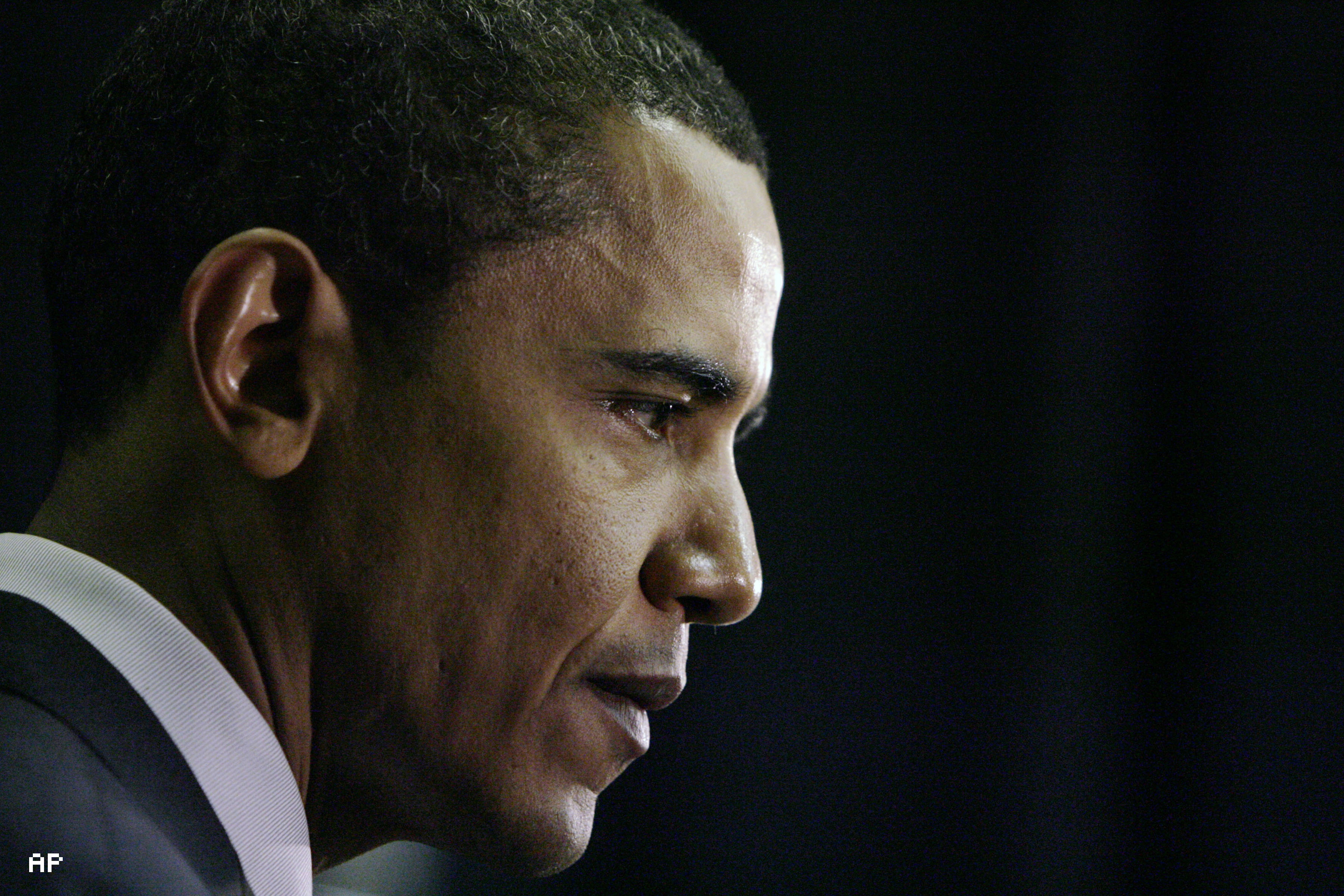 Thats right folks. He's not black. Or at least not any longer in any real way that matters to me. Now, he's the President of the United States. Now, its all about the job baby. I don't care if he ever shows up at another Negro chicken dinner for the next 4 years. I don't care if he doesn't make the King memorial gig next year, or deliver a commencement address at an HBCU. If he can fit that stuff in, thats cool. But to me, its all about the job now. The economy, the war, security, the environment, energy, health care, this is what its about. His blackness now means absolute bupkis to me. Its time to govern. Now...I'm all about his effectiveness.
November 18, 2008
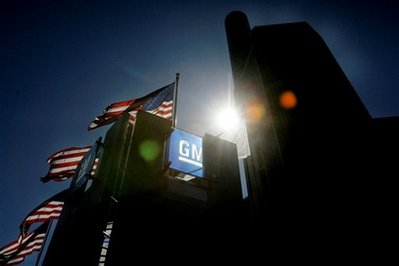
On G-20 and GM: Economics, Politics and Social Stability - Why Obama Will Bail Out Detroit
 By George Friedman ~ Honorary Political Season Contributor
The G-20 met last Saturday. Afterward, the group issued a meaningless statement and decided to meet again in March 2009, or perhaps later. Clearly, the urgency of October is gone. First, the perception of imminent collapse is past. Politicians are superb seismographs for detecting impending disaster, and these politicians did not act as if they were running out of time. Second, the
Given the sense in Europe that this financial crisis marked the end of
From Financial Crisis to Cyclical Recession
The financial crisis has been mitigated, if not solved. The problem now is that we are in a cyclical recession, and that every country is trying to figure out how to cope with the recession. Unlike the past two recessions, this one is more global than local. But unlike the 1970s, when recession was global, this one is not accompanied by soaring inflation and interest rates.
All recessions have different dynamics, but all have one thing in common: They impose punishment and discipline on economies run wild. This is happening around the world.
If the world were all about economics, culling is what the Chinese would do. But the world is more complex than that. A culling would lead to massive unemployment. Many Chinese employees live on
Economic Restructuring vs. Stability
The Chinese have therefore prepared a massive stimulus package that is more of a development program to make up for declining
This is not only a Chinese problem. Wherever there is an economic downturn, politicians must decide whether society — and their own political futures — can withstand the rigors recessions impose. Recessions occur when, as is inevitable, inefficiencies and irrationalities build up in the financial and economic system. The resulting economic downturn imposes a harsh discipline that destroys the inefficient, encourages everyone to become more efficient, and opens the doors to new businesses using new technologies and business models. The year 2001 smashed the technology sector in the
The business cycle works well, but the human costs can be daunting. The collapse of inefficient businesses leaves workers without jobs, investors without money and society less stable than before. The pain needed to rectify
Every country in the world is looking inward at the impact of the recession on its economy and measuring its resources. Countries are deciding whether they have the ability to prop up business that should fail, what the social consequences of business failure would be, and whether they should try to use their resources to avoid the immediate pain of recession. This is why the G-20 ended in meaningless platitudes.
Each country is also trying to answer the question of how much pain it — and its regime — can endure. The more pain imposed, the healthier countries will emerge economically — unless of course the pain kills them. Ultimately, the rationality of economics and the reality of society frequently diverge.
Recession and the
For the
There can be endless discussions of why the
This is what recessions are supposed to do. As in
That sounds easy, but the transition actually will be a bloodletting. Current employees of both the automakers and suppliers will be devastated. Institutions that have lent money to the automakers will suffer massive or total losses. Pensioners might lose pensions and health care benefits, and an entire region of the
Here the economic answer, cull, meets the social answer, stabilize. Policymakers have a decision to make. If the automakers fail now, their drain on the economy will end; the pain will be shorter, if more intense; and new industries would emerge more quickly. But though their drain on the economy would end, the impact of the automakers’ failure on the economy would be seismic. Unemployment would surge, as would bankruptcies of many auto suppliers. Defaults on loans would hit the credit markets. In the
In the
The Recession in Context
The people arguing for postponement aren’t foolish. The financial system is still working its way through a massive crisis that had little to do with the auto industry. Some traction appears to be occurring; certainly there was no crisis atmosphere at the G-20 meeting. The economy is in recession, but in spite of the inevitable claims that we have never seen anything like this one before, we have. There is always some variable that swings to an extreme — this time, it is consumer spending — but we are still well within the framework of recent recessions.
Consider the equity markets, which we regard as a long-term measure of the market’s evaluation of the state of the economy. In January 2000, the S&P 500 peaked at 1,455. This was the top of the market. In July 2002, 18 months later, the S&P bottomed out at 935. Over the next five years it rose to 1,519 in July 2007, the height for this cycle. It fell from this point until Nov. 12, 2008, when it closed at 852.30. This past Friday, it was at 873.29.
We do not know what the market will do in the future. There are people much smarter than we are who claim to know that. What we do know is what it has done. And what it has done this time — so far — is almost exactly what it did last time, except that in 2000-2002 it took 18 months to do it, while this time it was done in about 16 and a half months (assuming it bottomed out Nov. 12). But even if the market didn’t bottom out then, and it falls to 775, for example, it will have lost 50 percent of its value from the peak. This would be more than in 2000-2002, but not unprecedented.
The point we are making here is that if we regard the equity markets as a long-term seismograph of the economy, then so far, despite all the storm and stress, the markets — and therefore the economy — remain within the general pattern of the 2000-2002 market at the 2001 recession. That recession certainly was unpleasant, what with the devastation of the tech sector, but the economy survived. At the same time, however, it is clear that things are balanced on a knife’s edge. Another hundred points’ fall on the S&P, and the markets will be telling us that the world is in a very different place indeed.
A massive bankruptcy in the automotive sector could certainly set the stage for an economic renaissance in the next generation. But at this particular moment in time (it’s no coincidence that the crisis in the
There is a powerful counterargument to bailing out the
The only possible solution would be a bailout followed by a Washington-administered restructuring of the auto industry. This causes us to imagine a collaboration between the auto industry’s current management and Washington administrators that would finally put
The geopolitical problem confronting the world at the moment is that it has been forced to offer massive support to the global financial system with sovereign wealth — e.g., via taxes and currency printing presses. The world might just have squeaked through that crisis. Now, the world is in an inevitable recession and businesses are on the brink of failure. A wave of massive business failures on top of the financial crisis might well move the global system to a very different place. Therefore, each nation, by itself and indifferent to others, is in the process of figuring out how to postpone these failures to a more opportune time — or to never. This will build in long-term inefficiencies to the global economy, but right now everyone will be quite content with that.
Thus the financial crisis became a recession, and the recession triggered bankruptcies. And because no one wants bankruptcies right now, everyone who can is using taxpayer dollars to protect the taxpayer from the consequences of mismanagement. And the last thing any one cared about was the G-20 concept for the future of the economic system.
November 12, 2008
Bailing Out Detroit: Obama's Lose Lose Proposition
 President Elect Obama was elected with a tremendous level of support from labor unions and they didn't do that for nothing. Unions have every expectation that their priorities will be addressed, chief among them looming large and in charge on the horizon, a bailout of the Detroit Dinosaur Triad. The Dinosaur Triad wants a $25 billion dollar "bridge loan", basically sidling up next to the Wall Street beggars crying poor mouth and hollering "me too".
From our man on the street perspective, this situation is why you have to ask Obama, why do you want this job? Basically, this seems like a lose lose deal. Do it, and you can bet that the Dinosaur Triad won't be the last industry to come rooting in the taxpayer trough. Where does it stop? And with every industry that gets a taste while the electorate watches friends and neighbor's mortgages one after the other bite the dust when their jobs go puff like smoke, the voter's anger will increase as we ask the reasonable question, "so where's my bailout? I made a bad decision or two, some honest mistakes and now I'm hurting pretty bad. Where's the help for me?".
Don't do it, and a major constituency, labor unions and the working class folk they connect to, take the hit as the Dinosaur Triad burns through its remaining cash in the next six months and begins laying off thousands and shuttering plants at home and abroad. Ditto for the industry of suppliers to the Dinosaur Triad too. The effect will ripple through the economy and across the kitchen tables of Joe and Jamaal Sixpack with the family destroying force of a nuclear blast wave. And with every family that takes it on the chin, flying apart in economic meltdown, divorce and family dysfunction maxed out by financial disaster, the voter's anger will increase as we ask the reasonable question, "so where's my bailout? I made a bad decision or two, some honest mistakes and now I'm hurting pretty bad. Where's the help for me?".
How in the world does Obama thread this needle? Economists and free market fiscal conservatives say, let the Triad die, the Phoenix that will arise from the ashes will be stronger and better, but there is no doubt that letting Detroit and the millions who make their livelihood from that industry implode by inaction would be political suicide as the labor unions and their followers turn and savage Obama like rabid dogs. Liberals and progressives will say save it, but that means our multi-trillion dollar deficit continues to grow like the blob, gorging and gobbling up our fiscal health and insuring our status as a debtor nation to the likes of China and the petro kingdoms continues for decades. I got family that works in the industry and I'll bet many of you do too, so this is personal.
What do we do?
October 29, 2008
2008 and the Return of the Nation-State
 By George Friedman - Honorary Political Season Contributor
In 1989, the global system pivoted when the Soviet Union retreated from Eastern Europe and began the process of disintegration that culminated in its collapse. In 2001, the system pivoted again when al Qaeda attacked targets in the United States on Sept. 11, triggering a conflict that defined the international system until the summer of 2008. The pivot of 2008 turned on two dates, Aug. 7 and Oct. 11.
On Aug. 7, Georgian troops attacked the country’s breakaway region of South Ossetia. On Aug. 8, Russian troops responded by invading Georgia. The Western response was primarily rhetorical. On the weekend of Oct. 11, the G-7 met in Washington to plan a joint response to the global financial crisis. Rather than defining a joint plan, the decision — by default — was that each nation would act to save its own financial system with a series of broadly agreed upon guidelines.
The Aug. 7 and Oct. 11 events are connected only in their consequences. Each showed the weakness of international institutions and confirmed the primacy of the nation-state, or more precisely, the nation and the state. (A nation is a collection of people who share an ethnicity. A state is the entity that rules a piece of land. A nation-state — the foundation of the modern international order — is what is formed when the nation and state overlap.) Together, the two events posed challenges that overwhelmed the global significance of the Iraqi and Afghan wars.
The Conflict in Georgia
In and of itself, Russia’s attack on Georgia was not globally significant. Georgia is a small country in the Caucasus, and its fate ultimately does not affect the world. But Georgia was aligned with the United States and with Europe, and it had been seen by some as a candidate for membership in NATO. Thus, what was important about the Russian attack was that it occurred at all, and that the West did not respond to it beyond rhetoric.
Part of the problem was that the countries that could have intervened on Georgia’s behalf lacked the ability to do so. The Americans were bogged down in the Islamic world, and the Europeans had let their military forces atrophy. But even if military force had been available, it is clear that NATO, as the military expression of the Western alliance, was incapable of any unified action. There was no unified understanding of NATO’s obligation and, more importantly, no collective understanding of what a unified strategy might be.
The tension was not only between the United States and Europe, but also among the European countries. This was particularly pronounced in the different view of the situation Germany took compared to that of the United States and many other countries. Very soon after the Russo-Georgian war had ended, the Germans made clear that they opposed the expansion of NATO to Georgia and Ukraine. A major reason for this is Germany’s heavy dependence on Russian natural gas, which means Berlin cannot afford to alienate Moscow. But there was a deeper reason: Germany had been in the front line of the first Cold War and had no desire to participate in a second.
The range of European responses to Russia was fascinating. The British were livid. The French were livid but wanted to mediate. The Germans were cautious, and Chancellor Angela Merkel traveled to St. Petersburg to hold a joint press conference with Russian President Dmitri Medvedev, aligning Germany with Russia — for all practical purposes — on the Georgian and Ukrainian issues.
The single most important effect of Russia’s attack on Georgia was that it showed clearly how deeply divided — and for that matter, how weak — NATO is in general and the Europeans are in particular. Had they been united, they would not have been able to do much. But they avoided that challenge by being utterly fragmented. NATO can only work when there is a consensus, and the war revealed how far from consensus NATO was. It can’t be said that NATO collapsed after Georgia. It is still there, and NATO officials hold meetings and press conferences. But the alliance is devoid of both common purpose and resources, except in very specific and limited areas. Some Europeans are working through NATO in Afghanistan, for example, but not most, and not in a decisive fashion.
The Russo-Georgian war raised profound questions about the future of the multinational military alliance. Each member consulted its own national interest and conducted its own foreign policy. At this point, splits between the Europeans and Americans are taken for granted, but the splits among the Europeans are profound. If it was no longer possible to say that NATO functioned, it was also unclear after Aug. 8 in what sense the Europeans existed, except as individual nation-states.
The Global Financial Crisis
What was demonstrated in politico-military terms in Georgia was then demonstrated in economic terms in the financial crisis. All of the multinational systems created after World War II failed during the crisis — or more precisely, the crisis went well beyond their briefs and resources. None of the systems could cope, and many broke down. On Oct. 11, it became clear that the G-7 could cooperate, but not through unified action. On Oct. 12, when the Europeans held their eurozone summit, it became clear that they would only act as individual nations.
As with the aftermath of the Georgian war, the most significant developments after Oct. 11 happened in Europe. The European Union is first and foremost an arrangement for managing Europe’s economy. Its bureaucracy in Brussels has increased its authority and effectiveness throughout the last decade. The problem with the European Union is that it was an institution designed to manage prosperity. When it confronted serious adversity, however, it froze, devolving power to the component states.
Consider the European Central Bank (ECB), an institution created for managing the euro. Its primary charge — and only real authority — is to work to limit inflation. But limiting inflation is a problem that needs to be addressed when economies are otherwise functioning well. The financial crisis is a case where the European system is malfunctioning. The ECB was not created to deal with that. It has managed, with the agreement of member governments, to expand its function beyond inflation control, but it ultimately lacks the staff or the mindset to do all the things that other central banks were doing. To be more precise, it is a central bank without a single finance ministry to work with. Unlike other central banks, whose authority coincides with the nations they serve, the ECB serves multiple nations with multiple interests and finance ministries. By its nature, its power is limited.
In the end, power did not reside with Europe, but rather with its individual countries. It wasn’t Brussels that was implementing decisions made in Strasbourg; the centers of power were in Paris, London, Rome, Berlin and the other capitals of Europe and the world. Power devolved back to the states that governed nations. Or, to be more precise, the twin crises revealed that power had never left there.
Between the events in Georgia and the financial crisis, what we saw was the breakdown of multinational entities. This was particularly marked in Europe, in large part because the Europeans were the most invested in multilateralism and because they were in the crosshairs of both crises. The Russian resurgence affected them the most, and the fallout of the U.S. financial crisis hit them the hardest. They had to improvise the most, being multilateral but imperfectly developed, to say the least. In a sense, the Europeans were the laboratory of multilateralism and its intersection with crisis.
But it was not a European problem in the end. What we saw was a global phenomenon in which individual nations struggled to cope with the effects of the financial crisis and of Russia. Since the fall of the Soviet Union, there has been a tendency to view the world in terms of global institutions, from the United Nations to the World Trade Organization. In the summer of 2008, none of these functioned. The only things that did function effectively were national institutions.
Since 2001, the assumption has been that subnational groups like al Qaeda would define the politico-military environment. In U.S. Defense Department jargon, the assumption was that peer-to-peer conflict was no longer an issue and that it was all about small terrorist groups. The summer of 2008 demonstrated that while terrorism by subnational groups is not insignificant by any means, the dynamics of nation-states have hardly become archaic.
The Importance of the State
Clearly, the world has pivoted toward the nation-state as the prime actor and away from transnational and subnational groups. The financial crisis could be solved by monetizing the net assets of societies to correct financial imbalances. The only institution that could do that was the state, which could use its sovereign power and credibility, based on its ability to tax the economy, to underwrite the financial system.
Around the world, states did just that. They did it in very national ways. Many European states did it primarily by guaranteeing interbank loans, thereby essentially nationalizing the heart of the financial system. If states guarantee loans, the risk declines to near zero. In that case, the rationing of money through market mechanisms collapses. The state must take over rationing. This massively increases the power of the state — and raises questions about how the Europeans back out of this position.
The Americans took a different approach, less focused on interbank guarantees than on reshaping the balance sheets of financial institutions by investing in them. It was a more indirect approach and less efficient in the short run, but the Americans were more interested than the Europeans in trying to create mechanisms that would allow the state to back out of control of the financial system.
But what is most important is to see the manner in which state power surged in the summer and fall of 2008. The balance of power between business and the state, always dynamic, underwent a profound change, with the power of the state surging and the power of business contracting. Power was not in the hands of Lehman Brothers or Barclays. It was in the hands of Washington and London. At the same time, the power of the nation surged as the importance of multilateral organizations and subnational groups declined. The nation-state roared back to life after it had seemed to be drifting into irrelevance.
The year 1989 did not quite end the Cold War, but it created a world that bypassed it. The year 2001 did not end the post-Cold War world, but it overlaid it with an additional and overwhelming dynamic: that of the U.S.-jihadist war. The year 2008 did not end the U.S.-jihadist war, but it overlaid it with far more immediate and urgent issues. The financial crisis, of course, was one. The future of Russian power was another. We should point out that the importance of Russian power is this: As soon as Russia dominates the center of the Eurasian land mass, its force intrudes on Europe. Russia united with the rest of Europe is an overwhelming global force. Europe resisting Russia defines the global system. Russia fragmented opens the door for other geopolitical issues. Russia united and powerful usurps the global stage.
The year 2008 has therefore seen two things. First, and probably most important, it resurrected the nation-state and shifted the global balance between the state and business. Second, it redefined the global geopolitical system, opening the door to a resurgence of Russian power and revealing the underlying fragmentation of Europe and weaknesses of NATO.
The most important manifestation of this is Europe. In the face of Russian power, there is no united European position. In the face of the financial crisis, the Europeans coordinate, but they do not act as one. After the summer of 2008, it is no longer fair to talk about Europe as a single entity, about NATO as a fully functioning alliance, or about a world in which the nation-state is obsolete. The nation-state was the only institution that worked.
This is far more important than either of the immediate issues. The fate of Georgia is of minor consequence to the world. The financial crisis will pass into history, joining Brady bonds, the Resolution Trust Corp. and the bailout of New York City as a historical oddity. What will remain is a new international system in which the Russian question — followed by the German question — is once again at the center of things, and in which states act with confidence in shaping the economic and business environment for better or worse.
The world is a very different place from what it was in the spring of 2008. Or, to be more precise, it is a much more traditional place than many thought. It is a world of nations pursuing their own interests and collaborating where they choose. Those interests are economic, political and military, and they are part of a single fabric. The illusion of multilateralism was not put to rest — it will never die — but it was certainly put to bed. It is a world we can readily recognize from history.
October 22, 2008
The United States, Europe and Bretton Woods II
 By George Friedman and Peter Zeihan
French President Nicolas Sarkozy and U.S. President George W. Bush met Oct. 18 to discuss the possibility of a global financial summit. The meeting ended with an American offer to host a global summit in December modeled on the 1944 Bretton Woods system that founded the modern economic system.
The Bretton Woods framework is one of the more misunderstood developments in human history. The conventional wisdom is that Bretton Woods crafted the modern international economic architecture, lashing the trading and currency systems to the gold standard to achieve global stability. To a certain degree, that is true. But the form that Bretton Woods took in the public mind is only a veneer. The real implications and meaning of Bretton Woods are a different story altogether.
Conventional Wisdom: The Depression and Bretton Woods
The origin of Bretton Woods lies in the Great Depression. As economic output dropped in the 1930s, governments worldwide adopted a swathe of protectionist, populist policies — import tariffs were particularly in vogue — that enervated international trade. In order to maintain employment, governments and firms alike encouraged ongoing production of goods even though mutual tariff walls prevented the sale of those goods abroad. As a result, prices for these goods dropped and deflation set in. Soon firms found that the prices they could reasonably charge for their goods had dropped below the costs of producing them.
The reduction in profitability led to layoffs, which reduced demand for products in general, further reducing prices. Firms went out of business en masse, workers in the millions lost their jobs, demand withered, and prices followed suit. An effort designed originally to protect jobs (the tariffs) resulted in a deep, self-reinforcing deflationary spiral, and the variety of measures adopted to combat it — the New Deal included — could not seem to right the system.
Economically, World War II was a godsend. The military effort generated demand for goods and labor. The goods part is pretty straightforward, but the labor issue is what really allowed the global economy to turn the corner. Obviously, the war effort required more workers to craft goods, whether bars of soap or aircraft carriers, but “workers” were also called upon to serve as soldiers. The war removed tens of millions of men from the labor force, shipping them off to — economically speaking — nonproductive endeavors. Sustained demand for goods combined with labor shortages raised prices, and as expectations for inflation rather than deflation set in, consumers became more willing to spend their money for fear it would be worth less in the future. The deflationary spiral was broken; supply and demand came back into balance.
Policymakers of the time realized that the prosecution of the war had suspended the depression, but few were confident that the war had actually ended the conditions that made the depression possible. So in July 1944, 730 representatives from 44 different countries converged on a small ski village in New Hampshire to cobble together a system that would prevent additional depressions and — were one to occur — come up with a means of ending it shy of depending upon a world war.
When all was said and done, the delegates agreed to a system of exchangeable currencies and broadly open rules of trade. The system would be based on the gold standard to prevent currency fluctuations, and a pair of institutions — what would become known as the International Monetary Fund (IMF) and the World Bank — would serve as guardians of the system’s financial and fiduciary particulars.
The conventional wisdom is that Bretton Woods worked for a time, but that since the entire system was linked to gold, the limited availability of gold put an upper limit on what the new system could handle. As postwar economic activity expanded — but the supply of gold did not — that problem became so mammoth that the United States abandoned the gold standard in 1971. Most point to that period as the end of the Bretton Woods system. In fact, we are still using Bretton Woods, and while nothing that has been discussed to this point is wrong exactly, it is only part of the story.
A Deeper Understanding: World War II and Bretton Woods
Think back to July 1944. The Normandy invasion was in its first month. The United Kingdom served as the staging ground, but with London exhausted, its military commitment to the operation was modest. While the tide of the war had clearly turned, there was much slogging ahead. It had become apparent that launching the invasion of Europe — much less sustaining it — was impossible without large-scale U.S. involvement. Similarly, the balance of forces on the Eastern Front radically favored the Soviets. While the particulars were, of course, open to debate, no one was so idealistic to think that after suffering at Nazi hands, the Soviets were simply going to withdraw from territory captured on their way to Berlin.
The shape of the Cold War was already beginning to unfold. Between the United States and the Soviet Union, the rest of the modern world — namely, Europe — was going to either experience Soviet occupation or become a U.S. protectorate.
At the core of that realization were twin challenges. For the Europeans, any hope they had of rebuilding was totally dependent upon U.S. willingness to remain engaged. Issues of Soviet attack aside, the war had decimated Europe, and the damage was only becoming worse with each inch of Nazi territory the Americans or Soviets conquered. The Continental states — and even the United Kingdom — were not simply economically spent and indebted but were, to be perfectly blunt, destitute. This was not World War I, where most of the fighting had occurred along a single series of trenches. This was blitzkrieg and saturation bombings, which left the Continent in ruins, and there was almost nothing left from which to rebuild. Simply avoiding mass starvation would be a challenge, and any rebuilding effort would be utterly dependent upon U.S. financing. The Europeans were willing to accept nearly whatever was on offer.
For the United States, the issue was one of seizing a historic opportunity. Historically, the United States thought of the United Kingdom and France — with their maritime traditions — as more of a threat to U.S. interests than the largely land-based Soviet Union and Germany. Even World War I did not fully dispel this concern. (Japan, for its part, was always viewed as a hostile power.) The United States entered World War II late and the war did not occur on U.S. soil. So — uniquely among all the world’s major powers of the day — U.S. infrastructure and industrial capacity would emerge from the war larger (far, far larger) than when it entered. With its traditional rivals either already greatly weakened or well on their way to being so, the United States had the opportunity to set itself up as the core of the new order.
In this, the United States faced the challenges of defending against the Soviet Union. The United States could not occupy Western Europe as it expected the Soviets to occupy Eastern Europe; it lacked the troops and was on the wrong side of the ocean. The United States had to have not just the participation of the Western Europeans in holding back the Soviet tide, it needed the Europeans to defer to American political and military demands — and to do so willingly. Considering the desperation and destitution of the Europeans, and the unprecedented and unparalleled U.S. economic strength, economic carrots were the obvious way to go.
Put another way, Bretton Woods was part of a broader American effort to extend the wartime alliance — sans the Soviets — beyond Germany’s surrender. After all wars, there is the hope that alliances that have defeated a common enemy will continue to function to administer and maintain the peace. This happened at the Congress of Vienna and Versailles as well. Bretton Woods was more than an attempt to shape the global economic system, it was an effort to grow a military alliance into a broader U.S.-led and -dominated bloc to counter the Soviets.
At Bretton Woods, the United States made itself the core of the new system, agreeing to become the trading partner of first and last resort. The United States would allow Europe near tariff-free access to its markets, and turn a blind eye to Europe’s own tariffs so long as they did not become too egregious — something that at least in part flew in the face of the Great Depression’s lessons. The sale of European goods in the United States would help Europe develop economically, and, in exchange, the United States would receive deference on political and military matters: NATO — the ultimate hedge against Soviet invasion — was born.
The “free world” alliance would not consist of a series of equal states. Instead, it would consist of the United States and everyone else. The “everyone else” included shattered European economies, their impoverished colonies, independent successor states and so on. The truth was that Bretton Woods was less a compact of equals than a framework for economic relations within an unequal alliance against the Soviet Union. The foundation of Bretton Woods was American economic power — and the American interest in strengthening the economies of the rest of the world to immunize them from communism and build the containment of the Soviet Union.
Almost immediately after the war, the United States began acting in ways that indicated that Bretton Woods was not — for itself at least — an economic program. When loans to fund Western Europe’s redevelopment failed to stimulate growth, those loans became grants, aka the Marshall Plan. Shortly thereafter, the United States — certainly to its economic loss — almost absentmindedly extended the benefits of Bretton Woods to any state involved on the American side of the Cold War, with Japan, South Korea and Taiwan signing up as its most enthusiastic participants.
And fast-forwarding to when the world went off of the gold standard and Bretton Woods supposedly died, gold was actually replaced by the U.S. dollar. Far from dying, the political/military understanding that underpinned Bretton Woods had only become more entrenched. Whereas before, the greatest limiter was on the availability of gold, now it became — and remains — the whim of the U.S. government’s monetary authorities.
Toward Bretton Woods II
For many of the states that will be attending what is already being dubbed Bretton Woods II, having this American centrality as such a key pillar of the system is the core of the problem.
The fundamental principle of Bretton Woods was national sovereignty within a framework of relationships, ultimately guaranteed not just by American political power but by American economic power. Bretton Woods was not so much a system as a reality. American economic power dwarfed the rest of the noncommunist world, and guaranteed the stability of the international financial system.
What the September financial crisis has shown is not that the basic financial system has changed, but what happens when the guarantor of the financial system itself undergoes a crisis. When the economic bubble in Japan — the world’s second-largest economy — burst in 1990-1991, it did not infect the rest of the world. Neither did the East Asian crisis in 1997, nor the ruble crisis of 1998. A crisis in France or the United Kingdom would similarly remain a local one. But a crisis in the U.S. economy becomes global. The fundamental reality of Bretton Woods remains unchanged: The U.S. economy remains the largest, and dysfunctions there affect the world. That is the reality of the international system, and that is ultimately what the French call for a new Bretton Woods is about.
There has been talk of a meeting at which the United States gives up its place as the world’s reserve currency and primacy of the economic system. That is not what this meeting will be about, and certainly not what the French are after. The use of the dollar as world reserve currency is not based on an aggrandizing fiat, but the reality that the dollar alone has a global presence and trust. The euro, after all, is only a decade old, and is not backed either by sovereign taxing powers or by a central bank with vast authority. The European Central Bank (ECB) certainly steadies the European financial system, but it is the sovereign countries that define economic policies. As we have seen in the recent crisis, the ECB actually lacks the authority to regulate Europe’s banks. Relying on a currency that is not in the hands of a sovereign taxing power, but dependent on the political will of (so far) 15 countries with very different interests, does not make for a reliable reserve currency.
The Europeans are not looking to challenge the reality of American power, they are looking to increase the degree to which the rest of the world can influence the dynamics of the American economy, with an eye toward limiting the ability of the Americans to accidentally destabilize the international financial system again. The French in particular look at the current crisis as the result of a failure in the U.S. regulatory system.
And the Europeans certainly have a point. If fault is to be pinned, it is on the United States for letting the problem grow and grow until it triggered a liquidity crisis. The Bretton Woods institutions — specifically the IMF, which is supposed to serve the role of financial lighthouse and crisis manager — proved irrelevant to the problems the world is currently passing through. Indeed, all multinational institutions failed or, more precisely, have little to do with the financial system that was operating in 2008. The 64-year-old Bretton Woods agreement simply didn’t have anything to do with the current reality.
Ultimately, the Europeans would like to see a shift in focus in the world of international economic interactions from strengthening the international trading system to controlling the international financial system. In practical terms, they want an oversight body that can guarantee that there won’t be a repeat of the current crisis. This would involve everything from regulations on accounting methods, to restrictions on what can and cannot be traded and by whom (offshore financial havens and hedge funds would definitely find their worlds circumscribed), to frameworks for global interventions. The net effect would be to create an international bureaucracy to oversee global financial markets.
Fundamentally, the Europeans are not simply hoping to modernize Bretton Woods, but instead to Europeanize the American financial markets. This is ultimately not a financial question, but a political one. The French are trying to flip Bretton Woods from a system where the United States is the buttress of the international system to a situation where the United States remains the buttress but is more constrained by the broader international system. The European view is that this will help everybody. The American position is not yet framed and won’t be until the new president is in office.
But it will be a very tough sell. For one, at its core the American problem is “simply” a liquidity freeze and one that is already thawing. Europe’s and East Asia’s recessions are bound to be deeper and longer lasting. So the United States is sure — no matter who takes over in January — to be less than keen about revamps of international processes in general. Far more important, any international system that oversees aspects of American finance would, by definition, not be under full American control, but under some sort of quasi-Brussels-like organization. And no American president is going to engage gleefully on that sort of topic.
Unless something else is on offer.
Bretton Woods was ultimately about the United States trading access to its economic might for political and military deference. The reality of American economic might remains. The question, then, is simple: What will the Europeans bring to the table with which to bargain?
Subscribe to:
Posts (Atom)